BNY Expands Ripple Partnership to Support XRP and RLUSD on Its Institutional Custody Platform
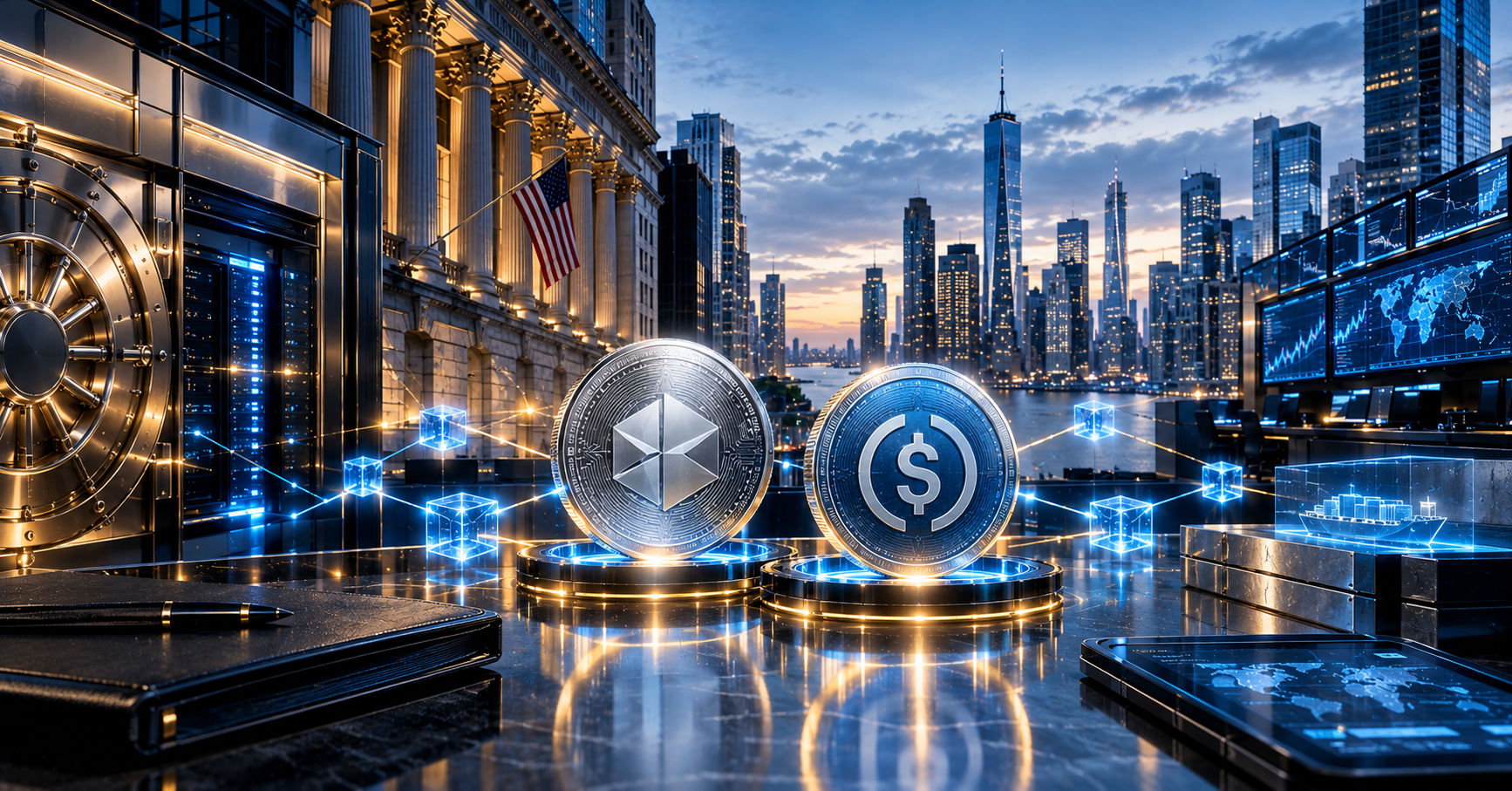
BNY, one of the world's major financial services and custody institutions, is expanding its partnership with Ripple to support XRP and the RLUSD stablecoin on its institutional digital-asset custody platform. The move adds new capabilities to a relationship that already includes custody arrangements connected to RLUSD's reserves.
Announced on October 27, 2026, the expanded collaboration is also focused on tokenized financial assets and potential blockchain applications in trade finance. The companies are exploring ways to connect traditional financial infrastructure with blockchain-based systems, including the possible tokenization of trade-finance assets on the XRP Ledger (XRPL).
The announcement is significant because institutional adoption depends on more than issuing digital tokens. Banks, asset managers and financial firms also need infrastructure to safeguard assets, manage operational risks and connect digital transactions with established financial processes.
However, the development should be understood as an expansion of custody and infrastructure services—not a declaration that BNY is investing billions of dollars in XRP or RLUSD.
What Has BNY Announced?
Under the expanded arrangement, BNY has started supporting XRP, the native digital asset of the XRP Ledger, and Ripple's US-dollar-pegged stablecoin, RLUSD, on its Digital Asset Custody platform.
The service is designed for eligible institutional clients that need digital-asset safekeeping within established governance and control frameworks. It allows clients to hold and transfer supported assets through the custody platform, subject to the applicable service arrangements and eligibility requirements.
The announcement builds on BNY's existing relationship with Ripple. In July 2025, Ripple selected BNY as the primary custodian for RLUSD's reserves. The latest expansion broadens the relationship beyond reserve custody to include support for XRP and RLUSD on BNY's institutional digital-asset platform.
The distinction matters. Holding the reserves that support a stablecoin is different from providing custody services for the stablecoin itself or for another digital asset. The expanded arrangement addresses additional institutional custody needs while the companies explore further applications.
Why Institutional Crypto Custody Matters
Institutional investors often face operational requirements that differ from those of individual crypto users.
A financial institution may need clear controls over who can authorise transactions, how assets are safeguarded, how records are maintained and how digital holdings fit into its existing risk-management processes. It may also need to satisfy internal compliance requirements and applicable regulatory obligations.
Institutional custody providers offer infrastructure designed to address these needs. Depending on the service, that can include asset safekeeping, transaction controls, operational oversight and reporting.
For banks and investment firms, the availability of custody infrastructure from an established financial services provider can make it easier to evaluate participation in digital-asset markets. It does not remove every risk, but it can help institutions manage parts of the operational challenge.
BNY's expanded support for XRP and RLUSD therefore represents an infrastructure development. It creates additional custody capabilities for eligible clients, while leaving each institution to determine whether and how those assets fit its investment, payment or treasury strategy.
How XRP and RLUSD Fit Into the Partnership
Although XRP and RLUSD are associated with the same ecosystem, they serve different purposes.
XRP is the native digital asset of the XRP Ledger. It can be used for transactions on the network and may be relevant to applications built around digital-asset transfers and blockchain infrastructure.
RLUSD is Ripple's US-dollar-pegged stablecoin. It is designed to maintain a value equivalent to one US dollar and is intended for uses that benefit from a digital representation of dollar value, subject to its terms, reserves and redemption arrangements.
Supporting both assets gives institutional clients access to different types of digital-asset exposure and functionality. XRP is a volatile crypto asset, while RLUSD is designed to track the US dollar. They should not be treated as interchangeable investments.
The custody announcement does not establish that BNY will use XRP for every transaction involving RLUSD, nor does it confirm that all clients will use both assets for payments or settlement. Those outcomes would depend on the specific services, integrations and commercial arrangements adopted by participating institutions.
Ripple and BNY Are Exploring Tokenized Trade Finance
One of the broader ambitions behind the expanded partnership is to investigate tokenization in trade finance.
Trade finance supports transactions between businesses, including the movement of goods and the financing of payments between buyers and sellers. Companies may have invoices or accounts receivable that represent money owed to them but that will not be paid until a later date.
Tokenization could represent certain financial claims through blockchain-based records. If supported by the appropriate legal structure and operational controls, such a model may create new ways to manage, transfer or finance eligible assets.
Ripple and BNY are reviewing a potential supply-chain finance model with C2FO, a working-capital platform. The proposed approach would explore tokenizing trade-finance assets, such as accounts receivable, on the XRP Ledger and potentially broadening investor access.
This is an area to watch, but the distinction between exploration and a live product is important. The companies are reviewing a model; the announcement does not establish that a fully operational tokenized trade-finance marketplace is already available to investors.
For the concept to work at scale, the parties would need to address issues including verification of underlying claims, legal ownership, transfer restrictions, settlement procedures and the risk of disputes or non-payment. Blockchain records alone cannot guarantee that an invoice is valid or that a borrower will pay.
Could RLUSD Minting and Redemption Become More Direct?
The expanded collaboration also includes work on a model that could allow BNY clients to mint and redeem RLUSD directly through the bank.
Minting generally refers to creating new stablecoin tokens when the relevant issuance requirements have been satisfied. Redemption refers to exchanging eligible tokens through the issuer's established process for the corresponding underlying value.
A direct institutional process could potentially simplify how participating clients access or redeem the stablecoin. The actual benefit would depend on the final operating model, eligibility conditions, fees, settlement arrangements and compliance procedures.
The announcement describes this as a model the companies are reviewing, rather than a service that should automatically be assumed to be available to every BNY customer.
Institutions considering stablecoins typically need clarity on how quickly they can move between bank money and digital tokens, what redemption rights apply, how transactions are monitored and what happens if a transfer or redemption is delayed.
These operational details are often just as important as the underlying blockchain technology.
What Does This Mean for XRP?
The expanded BNY-Ripple relationship may strengthen the institutional infrastructure surrounding XRP and the XRP Ledger. More custody options can make it easier for eligible financial institutions to hold and manage XRP under their own operational requirements.
But custody support should not be confused with a commitment to purchase XRP.
BNY's announcement does not, by itself, confirm a large XRP acquisition, a new XRP reserve, a specific amount of XRP that institutions will hold or a guaranteed increase in transaction volume on the XRP Ledger.
The same caution applies to price predictions. Greater institutional access could contribute to adoption over time, but XRP's market price depends on a range of factors, including supply and demand, broader crypto-market conditions, regulatory developments and actual use of the asset.
It is also important to distinguish between activity on the XRP Ledger and demand for XRP itself. Some applications built on the network may use stablecoins or tokenized assets without creating demand for XRP in proportion to the value of those assets.
The most useful indicators to watch after the announcement will be whether institutions begin using the new custody services, whether direct minting and redemption become operational, and whether the trade-finance initiative progresses beyond its exploratory stage.
Why RLUSD's Institutional Role Matters
Stablecoins can provide a digital means of transferring value denominated in a familiar currency. For institutional users, that can be relevant to payments, treasury operations and digital-asset transactions.
RLUSD's relationship with BNY began with reserve custody. Expanding the arrangement to include support for RLUSD on the institutional custody platform brings another part of the asset's infrastructure into the relationship.
For stablecoin adoption, however, institutional custody is only one element. Users also need confidence in reserve management, redemption procedures, regulatory compliance, technical security and the reliability of the services supporting the token.
The proposed work on direct minting and redemption could be meaningful if it delivers a clear and efficient process for eligible clients. Its importance will depend on how the final service operates, rather than on the announcement alone.
What to Watch Next
Several developments could determine how significant the expanded partnership becomes over the coming months.
First, institutions will need to establish whether the new XRP and RLUSD custody capabilities fit their operational and compliance requirements.
Second, the companies' proposed model for direct RLUSD minting and redemption will need to progress from review to a clearly defined service before its practical impact can be assessed.
Third, the work with C2FO will be worth monitoring for evidence of a live trade-finance use case. Relevant milestones would include the legal structure of tokenized receivables, the participation of financing providers, and how investors' rights and repayment risks are handled.
Finally, the broader XRP Ledger ecosystem will need to demonstrate that tokenization projects can attract real users and sustainable activity. Partnerships can provide important infrastructure, but lasting adoption depends on execution, security and commercial demand.
The Bigger Picture: Traditional Finance and Blockchain Infrastructure
BNY's expanded partnership with Ripple reflects a wider effort to connect established financial services with digital-asset systems.
For BNY, institutional digital-asset custody and potential tokenized-finance applications create opportunities to serve clients whose financial activities increasingly span traditional and blockchain-based infrastructure.
For Ripple, the relationship adds another institutional pathway for XRP and RLUSD custody and supports exploration of additional XRP Ledger use cases.
Neither development means that traditional financial markets are moving entirely onchain overnight. Institutional adoption usually requires extensive operational testing, legal review and risk controls before a new capability becomes widely used.
The partnership's long-term importance will therefore depend on what follows the announcement: how clients use the custody platform, whether the proposed RLUSD services become available, and whether tokenized trade finance develops into a practical commercial offering.
CoinAINews takeaway: BNY has expanded its institutional digital-asset custody support to include XRP and RLUSD while exploring tokenized trade finance with Ripple and C2FO. It is a meaningful infrastructure development, but it should not be misrepresented as a confirmed multibillion-dollar XRP purchase or a guarantee of higher XRP prices.
Sources
- Ripple and BNY, original announcement on the expanded partnership, October 27, 2026.
- Investing.com, "Ripple and BNY expand partnership on digital asset custody," October 27, 2026.
- Ripple, "Ripple Selects BNY to Custody Ripple USD Reserves," July 9, 2025.
Disclaimer: This article is for informational purposes only and does not constitute investment advice. XRP and other digital assets can be volatile. Readers should verify service availability and eligibility with the relevant providers.