
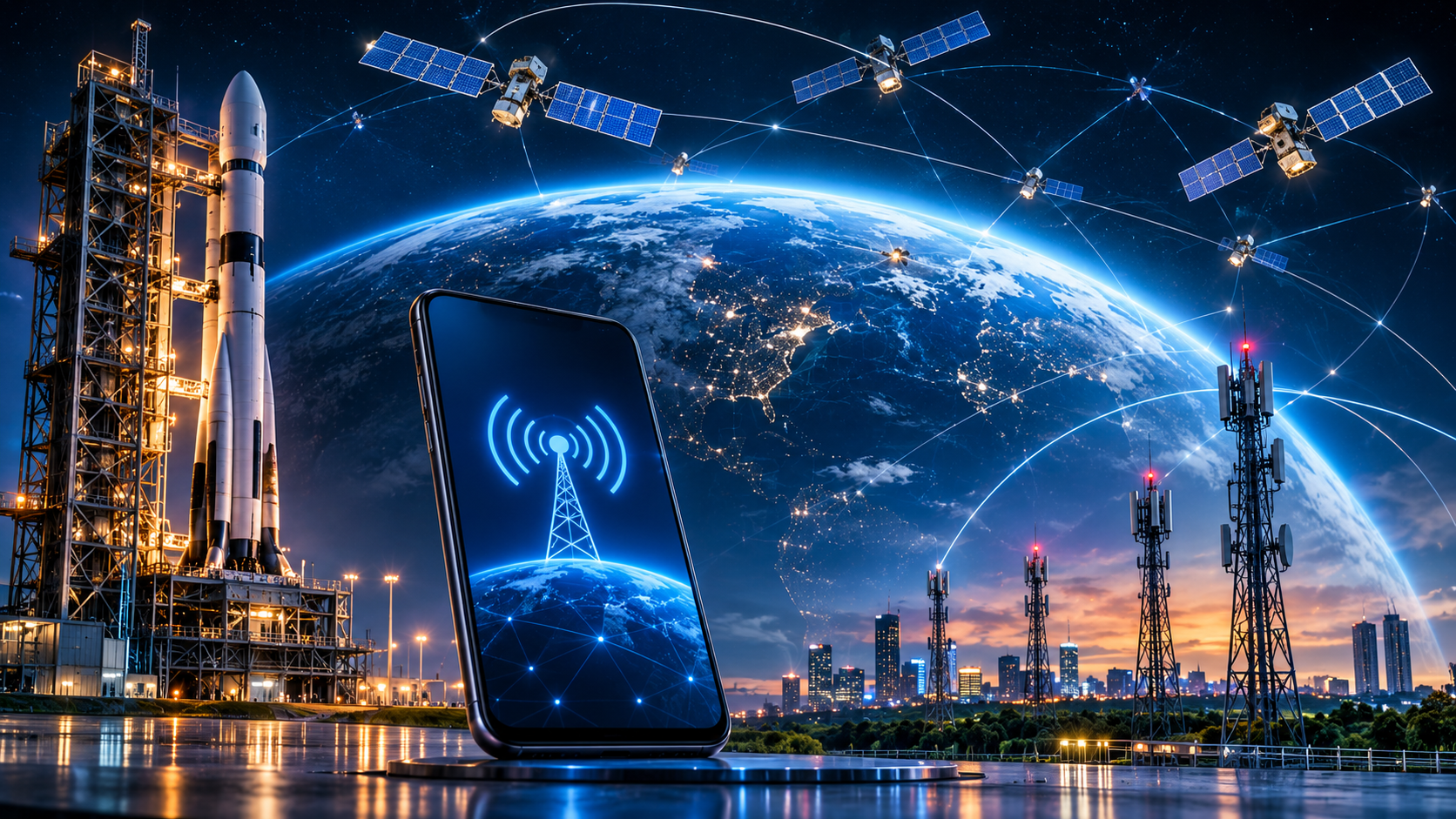
Elon Musk Wants to Challenge AT&T, Verizon and T-Mobile — SpaceX Eyes Boost Mobile Deal
Elon Musk is looking beyond rockets and satellite internet as SpaceX explores a potential move into the highly competitive U.S. mobile phone market. The company is reportedly in discussions with EchoStar about acquiring its wireless business, Boost Mobile, or securing access to the network that supports the carrier.
The development, reported by The Washington Post on November 2, 2026, could give SpaceX a faster route to launching its own consumer wireless service. The discussions come as Musk pushes to turn Starlink into a broader communications platform that combines satellite connectivity with traditional mobile infrastructure.
If an agreement moves forward, SpaceX could eventually compete more directly with America's established wireless operators, including AT&T, Verizon and T-Mobile.
However, the negotiations have not produced a confirmed acquisition. The two reported possibilities—buying Boost Mobile or gaining access to its network—would have different financial, regulatory and operational consequences.
SpaceX Is Reportedly in Talks to Buy Boost Mobile
According to The Washington Post, SpaceX has held discussions with EchoStar in recent months about launching its own branded wireless service through a potential Boost Mobile transaction.
The talks reportedly involve two possible routes: acquiring Boost Mobile outright or securing access to its existing wireless network.
Elon Musk has reportedly been personally involved in the discussions and met EchoStar Chairman Charlie Ergen last month.
Reuters also reported the negotiations on November 2, citing the Washington Post's reporting. Neither SpaceX nor EchoStar immediately responded to Reuters' requests for comment.
The distinction between the two possible arrangements matters.
An acquisition would give SpaceX ownership of an established wireless business, including its customer relationships and distribution operations. A network-access agreement could allow the company to offer mobile services without purchasing the entire business.
Either route could help SpaceX move faster than building a conventional wireless operation entirely from the ground up.
Why Elon Musk Wants to Enter America's Mobile Market
SpaceX has spent years building Starlink into a major satellite internet business. Its next challenge is extending that connectivity into everyday mobile services.
Traditional mobile operators depend on cell towers, spectrum licences, ground equipment and extensive network agreements. Satellite technology can help connect remote locations, but it does not automatically provide the same coverage and capacity as a terrestrial mobile network in crowded cities and indoor environments.
A deal involving Boost Mobile could help SpaceX address that gap.
Rather than relying entirely on satellites, the company could combine Starlink's space-based infrastructure with existing terrestrial network capacity.
That hybrid model could support a wireless service under the SpaceX or Starlink brand, giving customers access to conventional mobile connectivity as well as satellite-based coverage where compatible technology is available.
The strategy would also create another commercial opportunity for Starlink's growing satellite infrastructure.
On its latest earnings call, SpaceX Chief Financial Officer Bret Johnsen reportedly described the company's ambition to become a major mobile carrier in the United States.
Boost Mobile Could Give SpaceX Access to Millions of Subscribers
One of the biggest attractions of a potential Boost Mobile transaction is its existing customer base.
EchoStar reported approximately 7.38 million wireless subscribers at the end of the second quarter of 2026. The figure primarily includes customers from Boost Mobile and Gen Mobile.
For SpaceX, an established subscriber base could provide a faster entry into the consumer mobile business.
Building a wireless brand requires more than network technology. Companies must also develop customer support, billing systems, retail distribution, marketing operations and competitive service plans.
Boost Mobile already has an established presence in the U.S. wireless market, particularly in the prepaid and value-focused segment.
A potential transaction could therefore give SpaceX access to an existing commercial operation while it continues developing its satellite and terrestrial network capabilities.
However, the 7.38 million figure represents EchoStar's combined wireless subscriber base, not a confirmed Boost Mobile-only customer count.
AT&T and T-Mobile Could Complicate the Potential Deal
There is a major obstacle SpaceX may need to address before any agreement can become operational.
Boost Mobile relies on network capacity leased from AT&T and T-Mobile. It does not simply operate as an independent nationwide network with complete ownership of the underlying infrastructure.
That arrangement could create complications if SpaceX acquires the business.
According to the Washington Post's reporting, the existing network lease agreements may not automatically transfer to a new owner without approval from the major carriers.
This means SpaceX could potentially need to negotiate with AT&T and T-Mobile to preserve the network access that supports Boost Mobile's services.
The issue is significant because SpaceX wants to compete with the same companies whose infrastructure could help it launch a nationwide mobile offering.
A deal with EchoStar alone may therefore not be enough to guarantee that SpaceX can immediately operate Boost Mobile's existing network under new ownership.
The final structure would depend on contractual terms, carrier approvals and any relevant regulatory requirements.
Starlink Mobile: The Bigger Strategy Behind the Boost Mobile Talks
The reported negotiations are part of SpaceX's broader effort to combine satellite connectivity with conventional mobile services.
Starlink's Direct to Cell technology is designed to connect compatible mobile devices through satellites, extending connectivity beyond areas covered by traditional cell towers.
The approach could be useful in remote regions, rural communities and locations where building terrestrial infrastructure is expensive or difficult.
But satellite connectivity has technical limitations.
Dense urban areas, buildings, available spectrum and network capacity can all affect the quality of mobile service. Traditional cell towers remain essential for providing high-capacity connectivity in many locations.
That is why access to an existing wireless network could be strategically valuable.
A hybrid model would allow SpaceX to use terrestrial infrastructure where necessary while expanding satellite coverage in areas where conventional networks are limited.
The Boost Mobile discussions could help bring those two parts of the business together under a more direct consumer offering.
SpaceX Already Has a Major Spectrum Relationship With EchoStar
The latest discussions are not SpaceX's first major engagement with EchoStar.
In September 2025, SpaceX agreed to acquire wireless spectrum licences from EchoStar in a transaction valued at approximately $17 billion.
The agreement was intended to support Starlink's next-generation direct-to-device connectivity ambitions.
It also included arrangements under which Boost Mobile customers were expected to gain access to Starlink's satellite-to-phone services.
The relationship became more significant in May 2026, when the Federal Communications Commission approved major EchoStar spectrum transactions involving SpaceX and AT&T.
Reuters reported that the approved transactions covered approximately $40 billion in spectrum sales, including $17 billion for SpaceX's 65 MHz allocation and $23 billion for AT&T's approximately 50 MHz allocation.
These spectrum arrangements are important because mobile services require suitable radio frequencies as well as physical infrastructure.
The reported Boost Mobile discussions could represent another step in SpaceX's effort to build a more complete wireless business.
Can SpaceX Really Challenge America's Telecom Giants?
Entering the mobile market would put SpaceX in a different competitive environment from the one it faces in satellite internet.
AT&T, Verizon and T-Mobile already operate extensive networks across the United States. They have established customer bases, retail operations, network infrastructure and long-standing relationships with device manufacturers.
SpaceX would need to address several challenges before it could compete at a similar scale:
- Network infrastructure: Satellite connectivity alone cannot replace terrestrial coverage in every location.
- Spectrum access: Wireless services require suitable spectrum and regulatory permissions.
- Carrier agreements: Existing Boost Mobile network arrangements may require approval before they can be transferred or changed.
- Customer acquisition: SpaceX would need competitive pricing, customer support and marketing.
- Device compatibility: Its mobile service would need to work reliably with supported smartphones and network technologies.
The potential Boost Mobile deal could reduce some of these barriers, but it would not eliminate the need for substantial investment.
The U.S. wireless market is estimated by research firm MoffettNathanson at approximately $235 billion, according to the Washington Post. That makes it a significant opportunity, but also a market where established operators have considerable advantages.
What Could the Deal Mean for Boost Mobile Customers?
For existing Boost Mobile subscribers, the immediate question is whether a potential ownership or network agreement would change their mobile plans.
At this stage, there is no confirmed announcement about changes to Boost Mobile pricing, billing, coverage or customer accounts.
If SpaceX eventually acquires the business, it could decide to maintain the Boost brand, integrate it into Starlink Mobile or operate both services under separate brands.
A network-access arrangement could produce a different structure, allowing SpaceX to launch its own wireless offering while EchoStar continues operating Boost Mobile.
Customers should therefore avoid assuming that existing plans or services will change simply because acquisition talks have been reported.
Any actual transition would depend on the final agreement and the companies' subsequent announcements.
What Happens Next?
The next important development will be whether SpaceX and EchoStar reach a formal agreement.
Several questions remain unanswered:
- Will SpaceX acquire Boost Mobile or pursue a network-access arrangement?
- Will AT&T and T-Mobile approve any necessary changes to existing network agreements?
- Will the company launch a separate Starlink-branded mobile service?
- How will SpaceX combine satellite coverage with traditional cellular infrastructure?
- What will happen to Boost Mobile's existing customers and commercial operations?
For now, the negotiations remain a reported development rather than a completed transaction.
But the direction is becoming clearer: SpaceX wants to move beyond satellite broadband and establish a stronger position in the U.S. mobile communications market.
If the company secures the right network access and infrastructure, its Starlink business could eventually become a more direct competitor to America's established wireless carriers.
Frequently Asked Questions
Is Elon Musk's SpaceX buying Boost Mobile?
SpaceX is reportedly in talks with EchoStar about acquiring Boost Mobile or gaining access to its wireless network. No completed acquisition has been announced.
Who owns Boost Mobile?
Boost Mobile is part of EchoStar's wireless business.
Why does SpaceX want Boost Mobile?
A potential deal could provide SpaceX with an established subscriber base, distribution operations and access to terrestrial wireless infrastructure as it develops Starlink Mobile.
Could SpaceX compete with AT&T, Verizon and T-Mobile?
SpaceX is seeking to build a hybrid satellite-terrestrial mobile network. However, competing nationally would require substantial investment, network agreements, spectrum access and customer support infrastructure.
How many wireless subscribers does EchoStar have?
EchoStar reported approximately 7.38 million wireless subscribers at the end of the second quarter of 2026, primarily across Boost Mobile and Gen Mobile.
Does Boost Mobile use AT&T and T-Mobile networks?
Yes. Reuters reported that Boost Mobile leases network capacity from AT&T and T-Mobile.
Will Boost Mobile customers automatically receive Starlink service?
No automatic change has been confirmed. Any future service changes would depend on the terms of an agreement and official announcements from the companies.
Has SpaceX already purchased wireless spectrum from EchoStar?
Yes. SpaceX agreed to a major spectrum transaction with EchoStar in September 2025, valued at approximately $17 billion. The FCC approved the relevant spectrum transactions in May 2026.
Editorial Note
This article is based on reporting available on November 2, 2026. The potential Boost Mobile acquisition or network-access arrangement remains under discussion. SpaceX and EchoStar had not confirmed a completed transaction in the reports cited here.
Sources and Further Reading: