
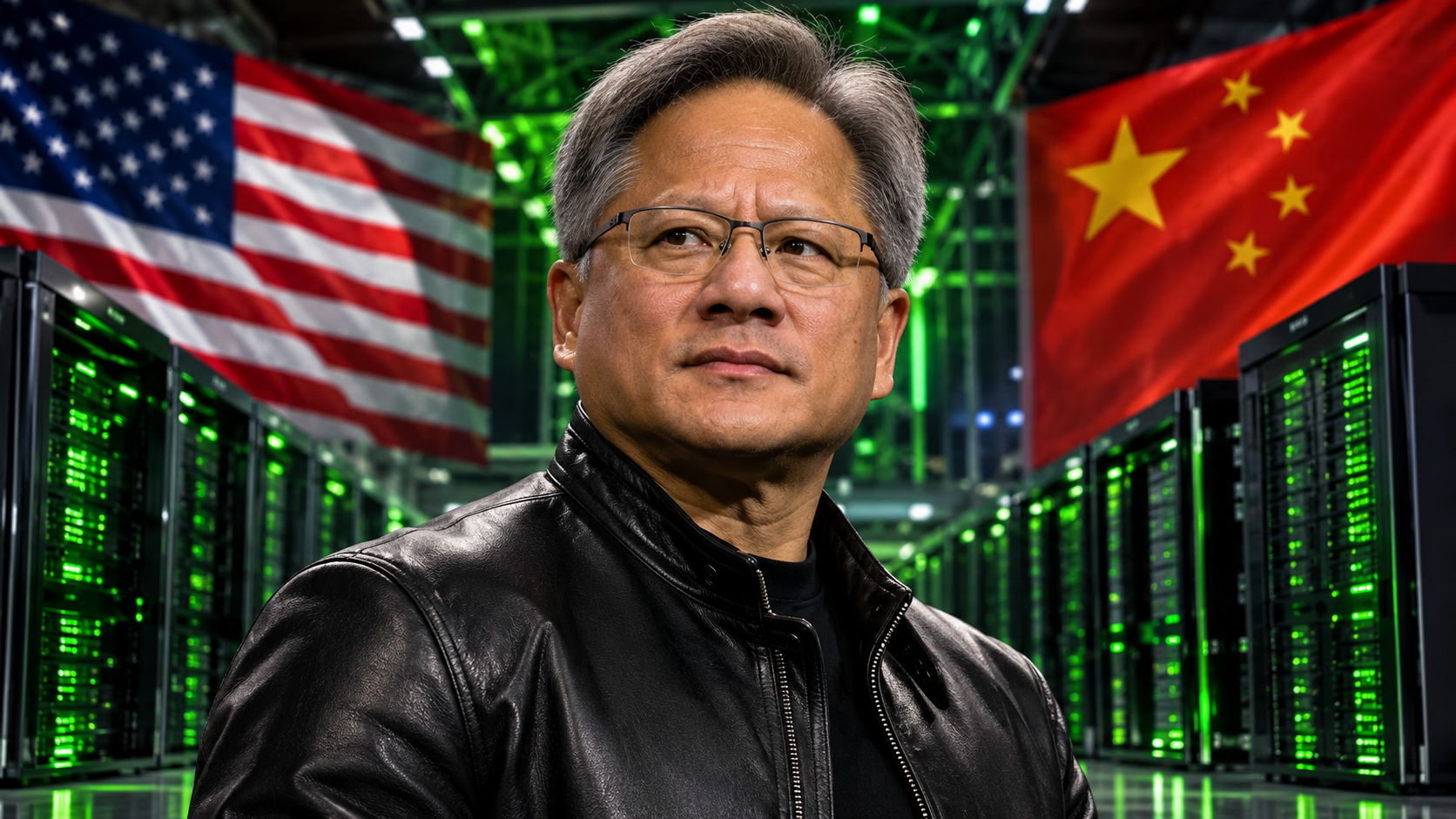
One CEO Got a Second Chance. China's Tech Billionaires Faced a Very Different Reality
One technology billionaire is back in the spotlight. Others have experienced very different journeys.
Nvidia CEO Jensen Huang's story has raised an interesting question about how powerful business executives are treated in different parts of the world.
While Huang's situation has attracted attention amid controversy and questions surrounding US-China technology relations, China's business history includes some striking cases of influential executives facing regulatory scrutiny and disappearing from public view.
The stories are not identical. But together, they reveal how complicated the relationship between corporate power, government influence and national security has become.
Jensen Huang's Nvidia Story Is About More Than a CEO
Jensen Huang is not an ordinary corporate executive.
He co-founded Nvidia in 1993 and helped turn the company from a graphics-chip manufacturer into one of the most influential players in the global artificial intelligence industry.
Today, Nvidia's processors are central to the development and operation of many advanced AI systems. Major technology companies, research laboratories and cloud providers rely on its hardware.
That makes Huang one of the most influential figures in the technology sector.
His leadership is closely connected to Nvidia's business strategy, relationships with customers and position in the global AI race.
Any major development involving Huang therefore attracts attention well beyond the company's shareholders.
The Controversy Surrounding Huang
Huang's personal and professional life has faced scrutiny following reports involving Alice Huang, a former executive at Singapore-based technology company Megaspeed.
Reports also raised questions about alleged connections to Chinese intelligence. However, such allegations should not be treated as established facts without independently verified evidence.
The controversy has attracted attention partly because Nvidia operates in an industry that has become increasingly important to US national security.
Advanced AI chips are no longer viewed simply as commercial products. They are also strategic technology assets.
That puts Nvidia and its leadership in a particularly sensitive position as Washington and Beijing compete for technological influence.
Why China's Billionaire Stories Are Being Compared
The comparison becomes more interesting when looking at the experiences of other influential business figures in China.
Alibaba founder Jack Ma became the centre of international attention after criticising aspects of China's financial regulatory system during a public speech in October 2020.
Soon afterwards, regulators suspended Ant Group's planned $37 billion initial public offering.
Ma then remained largely out of the public spotlight for several months. His absence triggered widespread speculation about the relationship between China's political leadership and its most powerful entrepreneurs.
There is no established public evidence that Ma was secretly detained during that period. Nevertheless, the episode became an important moment in China's technology and business history.
The Bao Fan Case Added Another Layer
Another case that attracted international attention involved Bao Fan, founder of China Renaissance.
In February 2023, the investment bank announced that it had been unable to contact him. The company later confirmed that Bao was cooperating with an investigation by Chinese authorities.
The development unsettled investors and raised questions about the risks facing senior executives in China's financial industry.
Bao's case was different from Jack Ma's experience, and neither should be directly equated with Huang's situation.
However, both illustrate how regulatory and political developments can have a major impact on the careers and public visibility of powerful business leaders.
America and China Have Different Corporate Power Structures
The United States and China both have significant influence over their major technology companies, but their systems are not the same.
In the US, corporate boards, shareholders, regulators, courts and political leaders can all influence the direction of major businesses.
In China, government authorities have a more direct role in setting the boundaries for important industries, particularly where national security, financial stability and political priorities are involved.
This does not mean that every American executive can easily recover from controversy or that every Chinese business leader faces the same risks.
The circumstances of each case matter.
But the difference in how business leadership interacts with government authority remains an important part of the global technology debate.
Why Nvidia Is at the Centre of the US-China AI Race
There is a much bigger issue behind Huang's story: artificial intelligence chips.
Nvidia's processors are among the most important components used to train and operate advanced AI models.
The United States wants to maintain its technological advantage, while China is investing heavily in its domestic semiconductor industry and trying to reduce its dependence on foreign technology.
That creates a difficult situation for Nvidia.
The company must manage commercial opportunities while operating under export restrictions and growing political pressure surrounding advanced chips.
Decisions about which markets can access its products can affect investors, AI developers and the future direction of the global technology industry.
One Comeback, Two Very Different Business Stories
Jensen Huang's story and the experiences of Jack Ma and Bao Fan are not the same. Their circumstances, companies and regulatory situations are different.
Yet they highlight a question that is becoming increasingly important as technology companies gain influence over the global economy.
How much freedom does a powerful technology executive really have when their company becomes strategically important to a country?
For Nvidia, Huang's leadership remains closely tied to the company's future in the AI industry. For China, the experiences of its high-profile business figures continue to shape discussions about entrepreneurship, regulation and government influence.
The biggest takeaway is that the technology industry is no longer driven by business competition alone. Politics, national security and access to critical technology are increasingly part of the same story.
And as the global AI race gets more intense, the power of the people leading its biggest companies may matter more than ever.
The Bottom Line
Jensen Huang's Nvidia story has attracted attention beyond the company's leadership because of the growing importance of AI chips and US-China technology relations.
The experiences of Jack Ma and Bao Fan offer a different perspective on the pressures faced by influential business leaders in China.
These are separate cases, but they raise a common question: how does government influence shape the future of powerful technology companies and the people running them?
About CoinAINews
CoinAINews Editorial Team covers cryptocurrency regulation, blockchain technology, digital asset markets, artificial intelligence, traditional finance and developments shaping the global technology industry.
Disclaimer: This article is for informational purposes only and does not constitute financial or investment advice. Allegations and reported developments are presented with appropriate qualifications and should not be interpreted as proven wrongdoing.