
Fired, Rejected, Then Back on Top: 5 Tech Founders Who Made Stunning Comebacks
In the technology industry, losing the CEO chair does not always mean losing the company you helped build. Sometimes, the biggest comeback stories begin with a resignation, a boardroom battle or an unexpected decision that leaves an entire industry wondering what happens next.
Nvidia's Jensen Huang has just delivered another extraordinary example.
After stepping down from his leadership position, Huang was reinstated as Nvidia's President and CEO on November 23, 2026, following a unanimous board decision. His return has brought an old Silicon Valley question back into focus: what happens when the person who built a technology company eventually finds their way back to its top job?
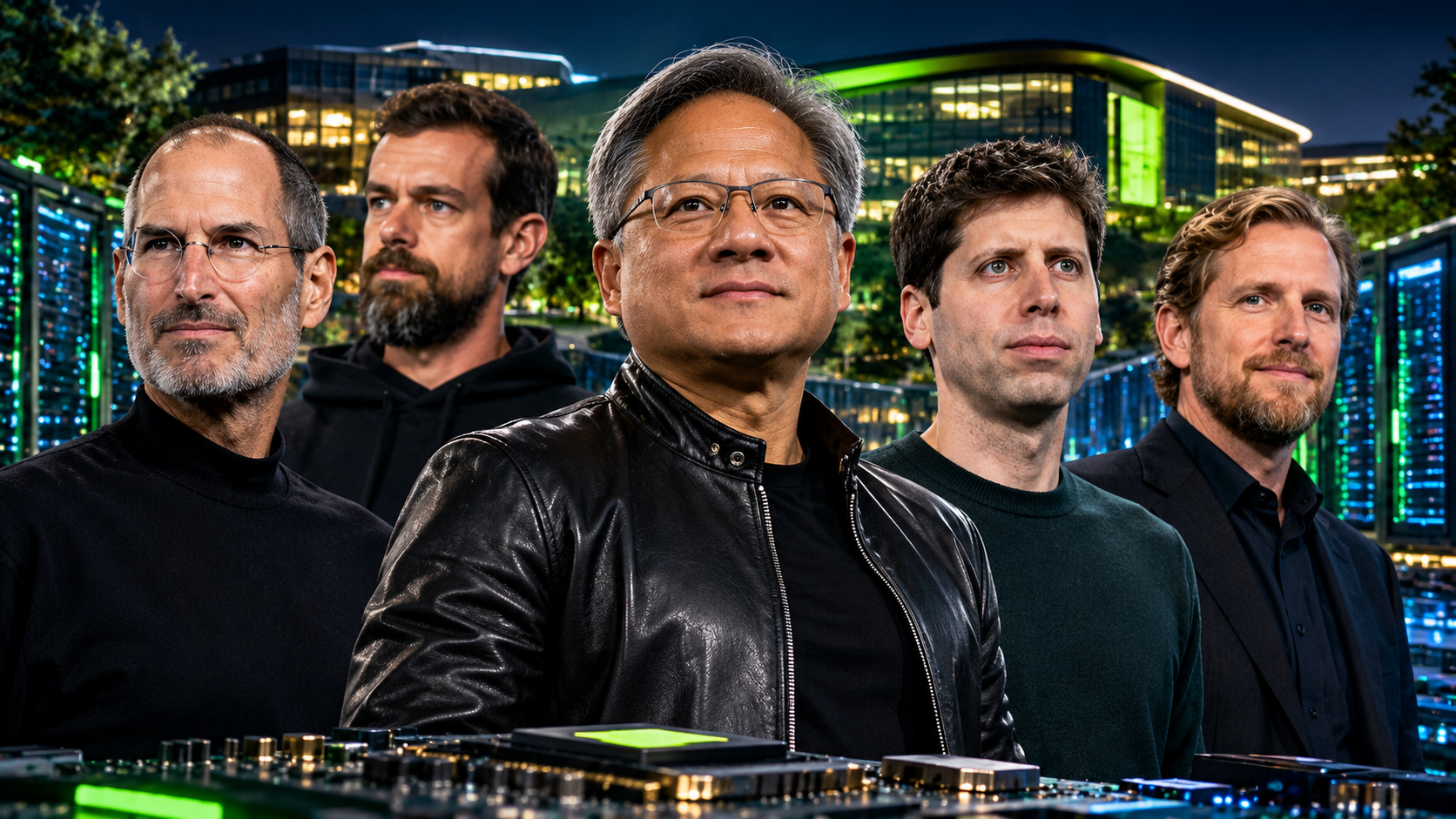
His story is not the first. Here are five technology founders whose careers took some unexpected turns before they returned to leadership.
1. Jensen Huang: Nvidia's CEO Returns After Just 11 Days
Jensen Huang's latest comeback has quickly become one of the most talked-about corporate stories in the technology industry.
Huang co-founded Nvidia in 1993, helping transform a graphics-chip company into one of the world's most influential players in artificial intelligence computing.
His departure followed controversy surrounding his personal conduct and questions about his communication with company leadership. Nvidia's board initially accepted his resignation and indicated that it would look for another leader.
But the situation changed dramatically.
On November 23, the board unanimously reinstated Huang as President and CEO. He returned to the company's headquarters, where employees welcomed him with applause.
His first message to employees was simple: he promised to become a better CEO the second time around.
The speed of his return makes this one of the most unusual leadership reversals in recent technology history.
2. Sam Altman: The OpenAI CEO Who Returned After a Boardroom Shock
In November 2023, the artificial intelligence industry was caught off guard when OpenAI removed Sam Altman as CEO.
The board said it had lost confidence in his leadership following concerns about communication and transparency.
But the reaction was extraordinary.
Hundreds of OpenAI employees publicly supported Altman, while Microsoft offered him a position to lead a new AI research team.
The pressure created an extraordinary corporate crisis. Just days later, OpenAI announced that Altman would return under a restructured board.
His comeback demonstrated how employees, investors and business partners can influence even the most powerful boardroom decisions.
3. Steve Jobs: The Comeback That Changed Apple's Future
Few technology comeback stories are as famous as Steve Jobs returning to Apple.
Jobs co-founded Apple but lost his operational leadership position in 1985 following a major disagreement with then-CEO John Sculley.
Instead of disappearing from the technology industry, Jobs established NeXT and became involved with Pixar.
More than a decade later, Apple acquired NeXT in 1996, bringing Jobs back into the company.
In 1997, he became interim CEO.
What followed was a remarkable period of product innovation. The iMac, iPod, iPhone and iPad helped redefine Apple's position in the global technology market.
Jobs' return became a defining example of how a founder's second chapter can transform a company.
4. Jack Dorsey: The Twitter Founder Who Came Back Seven Years Later
Jack Dorsey helped create Twitter in 2006 and became its first CEO.
However, disagreements over management and the company's direction led to his departure from the position in 2008.
Dorsey subsequently focused on Square, the payments company now known as Block.
But his connection with Twitter never completely disappeared.
In 2015, after Dick Costolo stepped down, Dorsey returned as Twitter's CEO.
He continued leading the company until 2021, when he stepped aside again.
His journey showed that leaving a company's leadership does not necessarily end a founder's relationship with the business.
5. Matt Mullenweg: A Surprisingly Short Exit From Automattic
Matt Mullenweg's leadership story took an unusually quick turn.
Known for co-founding WordPress, Mullenweg has played a central role in the development of the wider WordPress ecosystem.
In September 2026, Automattic's board placed him on paid leave and appointed an interim CEO.
But the change did not last long.
Following a challenge to the decision, Mullenweg returned to his leadership position as chairman and CEO.
The reported absence lasted approximately 33 hours and 20 minutes.
Compared with the years-long journeys of some other technology founders, his return was remarkably fast.
Why Do Technology Companies Keep Bringing Founders Back?
There is an interesting pattern behind these stories.
Founders often have something that traditional corporate executives may take years to develop: a deep understanding of the company's original vision, products and culture.
They may also have strong relationships with employees, investors and customers.
However, bringing a founder back is not always a guaranteed solution. Leadership controversies, corporate governance and accountability can remain major challenges even after a successful return.
That is why Jensen Huang's latest comeback is particularly interesting. Nvidia is not a struggling startup looking for its original founder. It is already a global AI powerhouse.
The bigger question is whether a founder's return can be just as powerful the second time around. Silicon Valley has seen some remarkable examples, but every comeback comes with its own challenges.
The Bottom Line
Jensen Huang's 11-day return to Nvidia is the latest in a long line of dramatic founder comebacks.
From Steve Jobs' historic Apple return to Sam Altman's boardroom battle at OpenAI, Silicon Valley has shown that a founder's second act can be just as powerful as the first.
But comebacks are not guaranteed solutions. Governance, accountability, and leadership controversies remain major challenges.
The bigger question: Can a founder's return be as transformative the second time around?
About CoinAINews
CoinAINews Editorial Team covers cryptocurrency regulation, blockchain technology, digital asset markets, traditional finance, and developments shaping the global tech industry.
Disclaimer: This article is for informational purposes only and does not constitute financial or investment advice.