Elon Musk Memecoins, $6.3 Billion Stolen: North Korea's Wild New Crypto Laundering Tactic Exposed
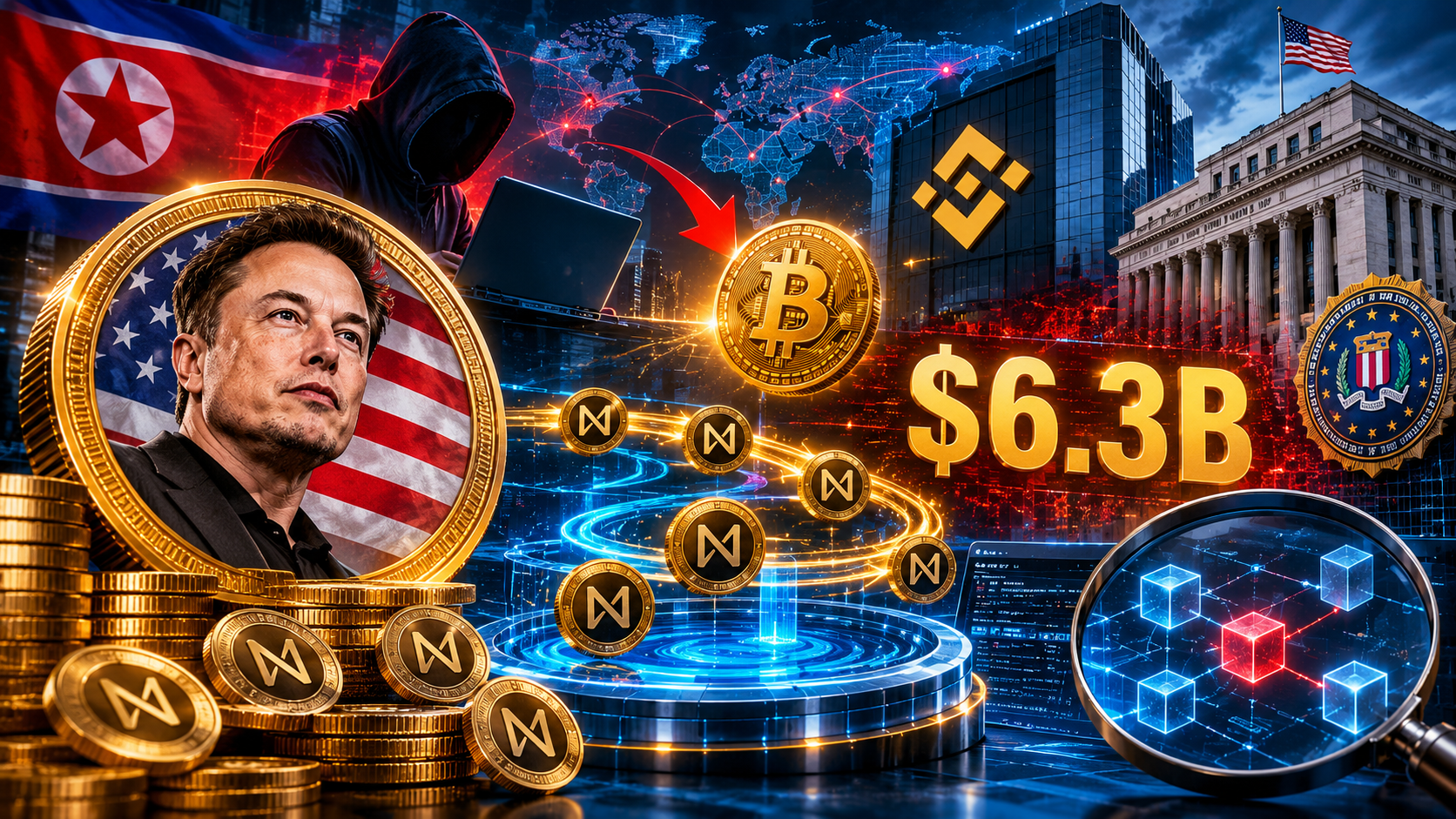
A cryptocurrency theft worth more than $6 billion has taken an unexpected turn. Instead of relying only on conventional crypto swaps and wallet transfers, hackers linked to North Korea have reportedly created their own memecoins — including one featuring Elon Musk — to make stolen funds harder to trace.
According to blockchain analytics firm Elliptic, the attackers moved approximately 117,000 NEAR tokens, worth around $430,000, through six newly created memecoins between November 5 and November 7.
The activity is connected to the massive Binance theft reported on October 29, 2026. The FBI has attributed that attack to North Korea and identified the operation as TraderTraitor.
However, there is an important distinction: the memecoin scheme involved roughly $430,000, not the entire $6.3 billion stolen from Binance. The smaller transactions reveal a creative laundering method that investigators are now monitoring.
Elon Musk's Image Appears in a Suspicious Memecoin
One of the six newly created tokens reportedly featured an image of Elon Musk beneath an "Elon 2028 President" banner.
The token was part of a group of unusual digital assets created on the NEAR blockchain. Other tokens included names such as FUK, OLCCL, MEILI, MMLI, DABI and SINU.
The use of Musk's image appears to have been part of the token's meme-style branding. There is no evidence that Elon Musk was involved in creating, promoting or supporting these tokens.
According to Elliptic's investigation, the tokens were not designed like conventional projects seeking long-term investors. Instead, they were short-lived instruments used to move cryptocurrency through decentralized exchange liquidity pools.
That distinction makes the case particularly unusual: the memecoins were reportedly created to support a money-laundering operation rather than build a genuine crypto community.
How Hackers Used Memecoins to Move Stolen Crypto
The reported technique relied on decentralized exchange liquidity pools.
Normally, when one wallet sends cryptocurrency directly to another, blockchain investigators can follow the transaction between those addresses. The hackers attempted to complicate that process by placing newly created tokens between the wallets.
The process reportedly worked in several stages:
- Create new tokens: The attackers launched six memecoins on the NEAR blockchain.
- Build liquidity pools: Each token was paired with NEAR in a decentralized exchange pool.
- Buy the tokens: One group of wallets used stolen NEAR to purchase the newly created memecoins.
- Sell through separate wallets: Another group of wallets sold those tokens back into the pools and received NEAR.
- Break the direct transaction link: The liquidity pools acted as an intermediary, making the movement appear like trading activity rather than a direct transfer between connected wallets.
The result was a transaction trail that could look more like ordinary speculative trading at first glance.
Elliptic co-founder and chief scientist Tom Robinson told CoinDesk that the tokens were traded by wallets associated with the laundering operation, making the stolen funds appear to be trading proceeds.
However, this method does not erase blockchain records. Investigators can still examine wallet activity, liquidity-pool transactions and token movements to identify suspicious patterns.
Just $430,000 Moved Through the Six Memecoins
The scale of the memecoin activity is small compared with the original Binance theft.
Elliptic identified approximately 117,000 NEAR, valued at around $430,000, moving through the six tokens. Its analysis also found that almost all the trading activity came from wallets connected to the scheme.
Outside buyers accounted for less than 1% of the trading volume in one of the tokens, according to the investigation reported by CoinDesk.
Trading across the six memecoins had stopped by November 8.
These details suggest the tokens were not operating as ordinary community-driven cryptocurrencies. Their short lifespan and concentrated trading activity instead point toward a coordinated effort to move funds between wallets.
FBI Names North Korea's TraderTraitor Group
The broader incident began on October 29, when attackers stole more than $6 billion in virtual assets from Binance.
On October 31, the FBI publicly attributed the theft to North Korea, identifying the cyber operation as TraderTraitor. The agency said the attackers had been converting stolen assets primarily into Ethereum.
The FBI, working with the U.S. Secret Service and IRS Criminal Investigation, urged cryptocurrency businesses and infrastructure providers to block transactions connected to the identified laundering addresses.
Blockchain analytics firms have also tracked the movement of the stolen assets across different networks and services.
Elliptic's analysis places the Binance incident among the largest cryptocurrency thefts ever recorded. Its earlier investigation estimated the stolen assets at approximately $6.43 billion.
Memecoins Are Becoming Another Tool for Crypto Laundering
The use of homemade memecoins is not entirely new.
Elliptic has identified a similar technique in connection with the 2025 Bybit hack, when attackers used newly created tokens and liquidity pools to move stolen funds. The latest Binance-related activity suggests that criminals may be reusing methods that have already appeared in previous major crypto thefts.
The tactic also exposes a difficult challenge for the cryptocurrency industry. Decentralized exchanges allow users to swap assets without relying on a traditional central operator, but the same infrastructure can be abused to make suspicious transactions harder to interpret.
Still, blockchain transparency remains a major obstacle for criminals. Even when funds pass through multiple wallets, tokens and liquidity pools, the underlying transactions remain recorded on public networks.
What This Means for Binance and the Crypto Industry
The latest findings highlight how cryptocurrency laundering methods continue to evolve after major exchange attacks.
For exchanges, decentralized finance platforms and blockchain analytics companies, identifying suspicious activity quickly is becoming increasingly important. A token created for only a few hours can still become part of a much larger financial investigation.
The case also demonstrates why memecoin activity should not automatically be treated as harmless speculation. While most memecoins are not connected to criminal activity, newly created tokens with concentrated trading and suspicious funding sources can attract attention from investigators.
For now, the six NEAR-based tokens represent a relatively small part of the Binance theft. But the technique behind them offers investigators another example of how stolen cryptocurrency can be routed through decentralized markets.
The bigger concern is not the Elon Musk-themed token itself. It is the growing sophistication of attempts to disguise the movement of billions of dollars in stolen digital assets.
The Bottom Line
North Korea-linked hackers reportedly used six disposable memecoins — including one featuring Elon Musk — to move approximately $430,000 in stolen NEAR from the Binance hack.
The technique relied on decentralized exchange liquidity pools to break the direct transaction link between wallets.
It doesn't erase blockchain records, but it makes tracing harder — and it shows how laundering tactics are evolving.
The FBI has attributed the $6.3 billion Binance theft to North Korea's TraderTraitor operation.
For the crypto industry, the lesson is clear: not every memecoin is harmless speculation. Some are tools for moving stolen funds.
About CoinAINews
CoinAINews Editorial Team covers cryptocurrency regulation, blockchain technology, digital asset markets and developments shaping the global crypto industry.
Disclaimer: This article is based on reporting and blockchain analysis published by Elliptic, CoinDesk and the FBI. Figures represent estimates reported by the cited sources and may change as investigations continue. This article is for informational purposes only and does not constitute financial or legal advice.