
S&P Dow Jones Indices and Kaiko Complete First On-Chain OTC Swap Referencing a Tokenized Benchmark on Canton Network
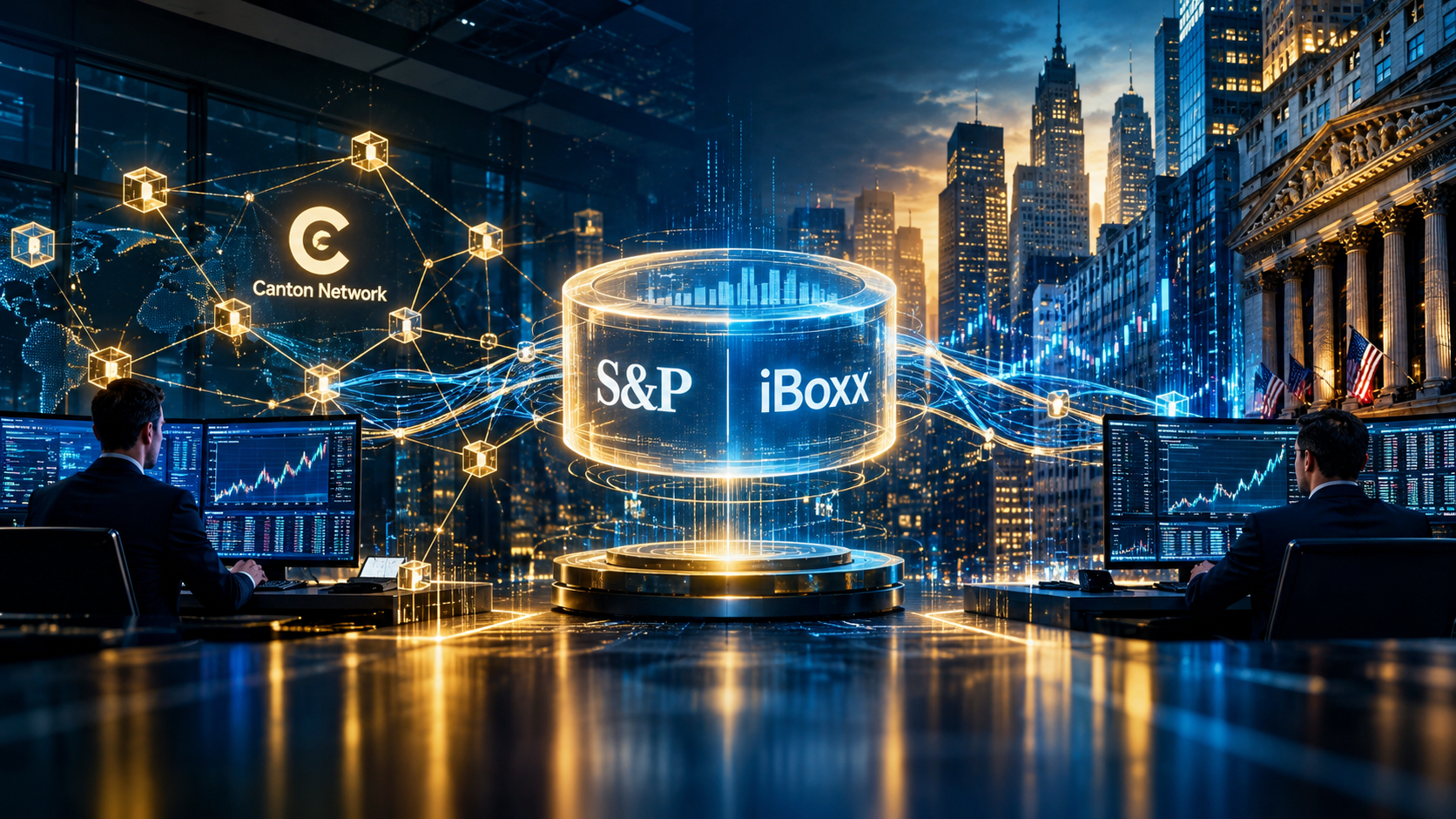
S&P Dow Jones Indices ("S&P DJI"), Kaiko and Derivnex today announced the completion of the first over-the-counter (OTC) swap transaction on the Canton Network. The total return swap, executed on Derivnex between DRW and Marex, references S&P DJI's iBoxx USD Liquid Investment Grade Index, which was tokenized on Canton by Kaiko.
The transaction represents the first OTC derivative to reference a fully tokenized index on distributed ledger infrastructure. It demonstrates how benchmark data, licensing, trade representation and valuation can be connected within privacy-enabled infrastructure designed for institutional markets.
Understanding the Transaction
OTC swaps are privately negotiated contracts that allow counterparties to gain or manage exposure to an asset or index without owning it directly. While these markets are central to institutional finance, managing a swap over its lifecycle typically involves multiple systems, bilateral communications and ongoing reconciliation between counterparties.
Through Derivnex, the trade was represented on Canton as a smart contract containing transaction terms and designed to remain with the trade throughout its lifecycle. This gives DRW and Marex a shared, synchronized record for managing valuations and other swap lifecycle events.
The swap provides exposure to the iBoxx USD Liquid Investment Grade Index, which tracks liquid, dollar-denominated investment-grade corporate bonds. As of February 28, 2026, the index included approximately 3,039 constituents with a modified market-value weighted methodology and a 3% cap on each issuer.
The Benchmark Behind the Trade
Kaiko tokenized the iBoxx USD Liquid Investment Grade Index on Canton. The token combines the benchmark data with access permissions and usage rules, designed to enable authorized participants to consume the index data within digital financial workflows while preserving S&P DJI's licensing and intellectual-property controls.
For this transaction, Kaiko also distributed the signed S&P DJI official index values that Derivnex uses to value the position throughout its lifecycle. Together, the tokenized benchmark and pricing infrastructure allow the index to support a live OTC derivative transaction on distributed ledger infrastructure.
"This transaction demonstrates how tokenized benchmark infrastructure can support new institutional markets and products, while preserving the licensing, governance and operational standards required by financial institutions," said Ambre Soubiran, CEO of Kaiko.
A Framework for Institutional Derivatives
Derivnex incorporates the Common Domain Model (CDM), providing a standardized digital representation of derivatives transactions and lifecycle events. The CDM is an open-source framework developed under the Fintech Open Source Foundation (FINOS) that creates a single, consistent foundation for trade lifecycle automation, regulatory reporting and interoperability across institutions and infrastructures.
Built on Canton, the platform enables bilateral OTC counterparties to coordinate transaction workflows while maintaining the confidentiality required by institutional markets.
"OTC derivatives are one of the largest markets in institutional finance, but much of the infrastructure supporting them remains fragmented," said George Harrington, CEO of Derivnex. "Derivnex gives counterparties a common digital representation of a trade from affirmation through its full lifecycle. Completing the first OTC swap on Canton shows how that model can work in a live institutional market."
Industry Perspectives
Cameron Drinkwater, Chief Product Operating Officer at S&P DJI, emphasized the significance for benchmark infrastructure: "This transaction shows how established benchmark infrastructure can support new institutional market structures. Pairing a flagship index with controlled digital distribution through Kaiko extends our credit franchise into on-chain finance, building on more than two decades of liquidity, transparency and tradability on iBoxx benchmarks while preserving trusted rigor and governance."
Don Wilson, Founder and CEO of DRW, highlighted the operational benefits: "Uncleared OTC derivatives are a large and growing market with cumbersome back office workflows. With Derivnex on Canton, Marex and DRW are able to work from the same record, thereby streamlining processes. I'm excited by the efficiency this could bring across more trades and counterparties, particularly when cash and collateral movement become integrated."
Nilesh Jethwa, CEO of Marex Solutions, noted the bridge between traditional and digital finance: "In line with Marex's focus on bridging traditional finance and digital assets, this transaction provides a practical example of how OTC derivatives can be represented and managed on distributed ledger infrastructure. It shows how new technology can support more coordinated and transparent workflows while preserving the controls required by institutional market participants."
Scott O'Malia, CEO of ISDA, underscored the role of industry standards: "The Common Domain Model provides a consistent digital representation of financial transactions and lifecycle events. Its use in platforms such as Derivnex demonstrates how industry standards can support greater automation and interoperability in derivatives markets at scale."
Yuval Rooz, CEO and Co-Founder of Digital Asset, added: "Derivatives are a natural fit for programmable financial infrastructure because the transaction continues to evolve long after the initial trade. Derivnex is demonstrating how counterparties can manage that full lifecycle on shared infrastructure while preserving the controls institutional markets require."
What Comes Next
Derivnex initially plans to focus on equity and index derivatives, including index, basket and single-name products. Future functionality is expected to connect Derivnex-managed positions with digital cash and collateral on Canton, enabling margin, collateral and contractual payments to move within the same infrastructure as the underlying transaction.
The sample transaction gives benchmark providers a controlled and auditable way to distribute index intellectual property across new institutional markets and products. It also gives trading platforms and counterparties a standardized way to consume benchmark data within their existing transaction and lifecycle workflows.