
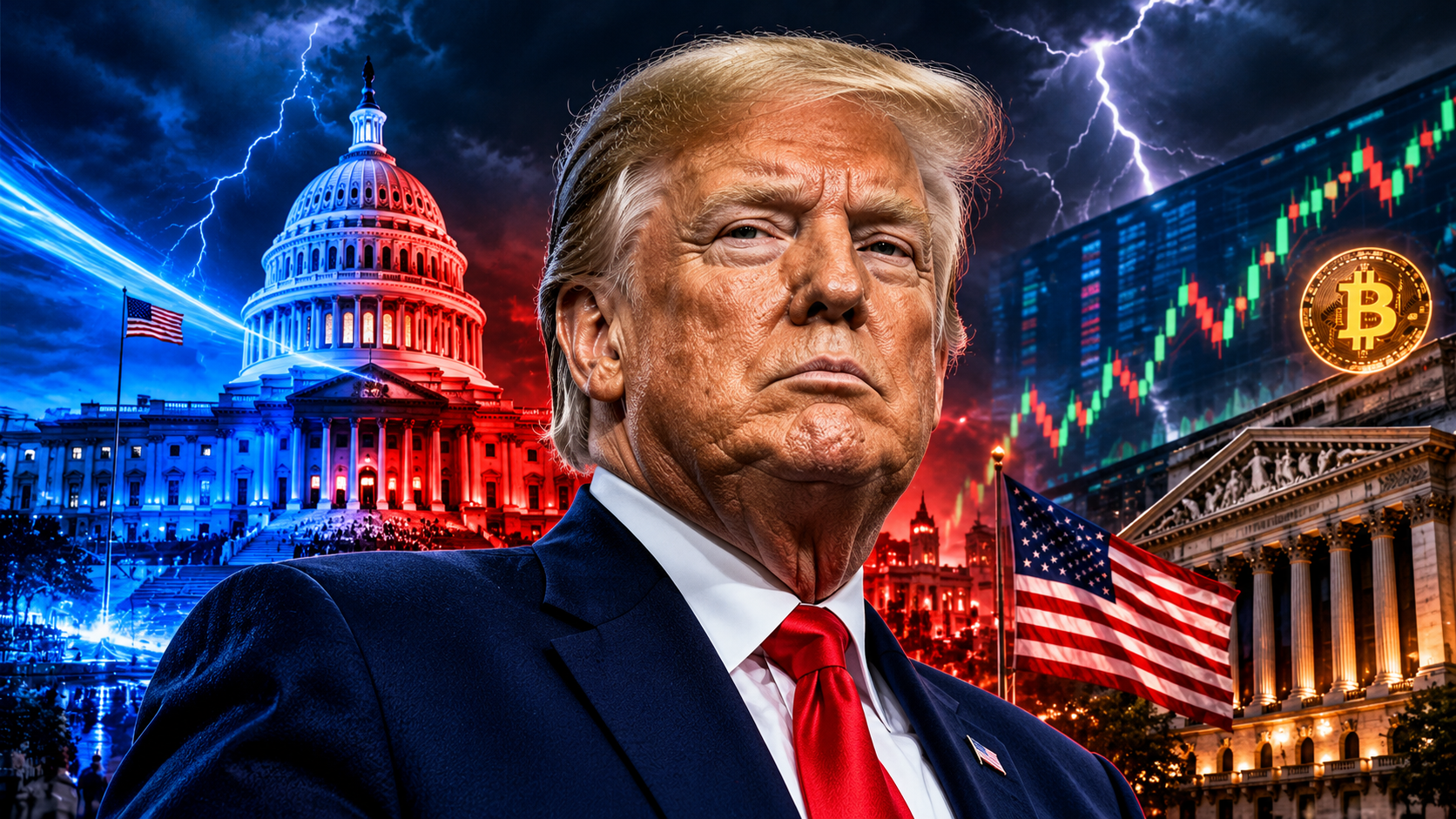
Trump Loses Congress: 8 Shocking Ways a Democratic Midterm Sweep Could Change America — From Crypto to Iran
Washington could be heading toward one of the most consequential political showdowns of Donald Trump's second presidency.
As Americans vote in the November 3, 2026 midterm elections, prediction markets are increasingly pricing in a possible Democratic takeover of both chambers of Congress. The probability of a Democratic sweep has hovered around the 75%–80% range on major prediction-market platforms, although those odds can change and are not election results.
A Democratic victory in the House and Senate would not remove Trump from the White House. It would, however, change who controls congressional committees, investigations, legislative priorities and the federal budget.
For Trump, the final two years of his presidency could become considerably more complicated. For crypto companies, investors, defense contractors and the wider global economy, the consequences could reach far beyond Washington.
Here are eight major developments that could follow if Democrats take control of Congress.
1. Trump's Legislative Agenda Could Hit a Political Wall
The first major consequence would be a dramatic shift in Washington's legislative balance.
With Republicans controlling Congress, Trump has had a more favourable environment for advancing his policy priorities. A Democratic takeover would make that much harder.
Democrats could block or substantially rewrite Republican-backed legislation, refuse to advance certain administration priorities and use committee control to challenge the White House.
But there is an important constitutional reality: Trump would still have the presidential veto.
That creates the possibility of a legislative stalemate. Democrats could pass bills that Trump rejects, while Trump could struggle to get his own proposals through a Congress controlled by the opposition.
Overriding a presidential veto requires a two-thirds majority in both the House and Senate, a threshold that Democrats would not automatically have even after winning both chambers.
The result could be two years of political gridlock, with fewer major legislative victories for either side.
2. Congressional Investigations Could Put Trump's Administration Under Pressure
A Democratic-controlled Congress would have another powerful tool: oversight.
Committee chairs have significant influence over which issues receive hearings, which government officials are questioned and which records lawmakers seek.
If Democrats take control, congressional investigations into the Trump administration could become a central feature of Washington politics.
Potential areas of scrutiny include:
- Business interests and crypto ventures linked to Trump and his family.
- Possible conflicts of interest involving government policy and private financial interests.
- Tariff exemptions, trade decisions and the companies that benefit from them.
- Relationships between political donors, government officials and major businesses.
- The administration's handling of foreign policy and federal spending.
Crypto could become one of the most politically sensitive areas.
Trump-linked digital asset ventures, including World Liberty Financial and the TRUMP memecoin, have already attracted scrutiny from Democratic lawmakers.
Reuters has reported that Democrats are preparing investigations into crypto businesses connected to Trump and his family, arguing that the financial relationships could raise conflict-of-interest concerns.
However, an investigation is not proof of wrongdoing. Congressional hearings can generate political pressure and public scrutiny, but they do not automatically establish criminal liability.
The bigger change would be that Trump's political and business interests could face much closer examination from Capitol Hill.
3. Could Trump Face Impeachment Again?
This is arguably the most explosive political possibility.
If Democrats win control of the House of Representatives, they would have the power to initiate impeachment proceedings against Trump.
The House can impeach a president with a simple majority vote. But impeachment does not itself remove a president from office.
Removal requires a conviction in the Senate, where two-thirds of senators present must vote to convict.
That distinction matters enormously.
Even if Democrats control both chambers, they would need substantial Republican support to reach the two-thirds threshold. Without it, impeachment could become a major political confrontation without necessarily ending Trump's presidency.
Democratic leaders have not committed to launching impeachment proceedings simply because they might win the House.
For now, the more immediate possibility is that a Democratic majority could hold hearings, investigate the administration and decide whether particular findings justify further action.
In other words, impeachment could return to the political conversation, but it is not an automatic consequence of a Democratic victory.
4. Budget Battles Could Become a Major Weapon Against the White House
Control of Congress also means influence over federal spending.
The House of Representatives plays a central role in originating revenue legislation, while both chambers must approve federal appropriations and other spending measures.
A Democratic Congress could use budget negotiations to demand changes to Trump's priorities.
Potential flashpoints could include:
- Defense and military spending.
- Immigration enforcement funding.
- Healthcare programmes.
- Federal agency budgets.
- Domestic infrastructure and social spending.
- Funding connected to the administration's foreign policy.
The debt ceiling could become another source of political conflict if lawmakers fail to agree on a deal.
There is also the question of presidential nominations. The Senate has a constitutional role in confirming many senior administration officials and federal judges.
If Democrats control the Senate, they could slow, reject or demand changes to some of Trump's nominees.
That would give the opposition party influence over the administration even without controlling the presidency.
5. The Risk of Another Government Shutdown Could Rise
A divided Washington often makes government funding negotiations more difficult.
If Democrats control Congress, funding bills could become bargaining tools in negotiations with the White House.
Democrats could demand concessions on spending, healthcare, immigration or other policy areas before supporting a funding agreement.
Trump, meanwhile, could refuse to accept terms he considers unacceptable or veto legislation that reaches his desk.
If Congress and the president fail to approve the necessary funding measures, parts of the federal government could shut down.
A shutdown would not mean every government operation stops. Services considered essential can continue, while other agencies and programmes may face interruptions, furloughs or delays.
The risk would depend on the specific budget negotiations, deadlines and willingness of both parties to compromise.
For financial markets, the concern would be more than political theatre. Prolonged funding disputes can create uncertainty for government contractors, federal employees and businesses that depend on government operations.
6. The Iran Conflict Could Become a Major Congressional Flashpoint
Foreign policy is one area where a Democratic Congress could challenge Trump, but its ability to directly end a military conflict would be limited.
Democratic lawmakers could demand greater transparency about the administration's military objectives, the legal basis for military operations and the cost of the conflict involving Iran.
They could also use hearings, resolutions and spending legislation to put pressure on the White House.
The most important potential leverage would be funding.
Congress has significant authority over federal spending, including appropriations for military operations. A determined congressional majority could attempt to restrict or condition funding.
But the president remains commander-in-chief, and the relationship between presidential military authority and congressional war powers is legally and politically complex.
The War Powers Resolution provides Congress with mechanisms to challenge certain military actions. However, a resolution that faces a presidential veto would require a two-thirds majority in both chambers to become law over that veto.
That is a difficult threshold.
A Democratic victory would therefore not automatically end the Iran conflict. It could, however, increase pressure on the administration and make continued military operations a much bigger political issue.
For oil markets, energy companies and global investors, any change in the conflict's trajectory could have consequences for geopolitical risk and energy prices.
7. Crypto Regulation Could Face a Major Reset
For the cryptocurrency industry, a Democratic takeover could be one of the most closely watched consequences of the election.
The central issue is the CLARITY Act, the proposed legislation intended to establish a clearer regulatory framework for digital assets in the United States.
The bill's progress has already faced political and legislative obstacles in the Senate.
A Democratic-controlled Congress could change the direction of negotiations.
If Democrats take the Senate, Senator Elizabeth Warren could become a leading contender to chair the Senate Banking Committee, depending on the chamber's leadership and committee decisions.
That possibility matters because committee chairs influence hearings, legislative priorities and which proposals receive attention.
Warren has been one of the most prominent critics of parts of the crypto industry, particularly around consumer protection, financial stability, illicit finance and regulatory oversight.
A Democratic-led Senate Banking Committee could therefore demand stronger safeguards and more restrictive provisions before supporting crypto legislation.
The potential consequences include:
- A slower path for the CLARITY Act.
- More debate over the division of authority between the SEC and CFTC.
- Stronger consumer-protection and anti-money-laundering provisions.
- Greater scrutiny of politically connected crypto businesses.
- More hearings involving exchanges, stablecoin issuers and digital asset companies.
The Block has reported that industry participants expect a shift from legislative progress toward greater congressional oversight if Democrats take control.
However, a complete two-year freeze is not guaranteed. Lawmakers could still negotiate a narrower bipartisan bill, and the timing of any legislation would depend on committee priorities and political compromises.
One important distinction: Bitcoin's classification and treatment may be less politically contentious than the broader question of how other digital assets should be regulated. But even that does not mean every Bitcoin-related policy issue would be settled.
For crypto investors, the key question is no longer just whether Washington will introduce clearer rules. It is what those rules will require from the industry.
8. Wall Street Could React Differently Than Politics Suggests
A Democratic sweep might create uncertainty for some companies, but that does not necessarily mean the stock market would collapse.
In fact, historical market data offers a more complicated picture.
J.P. Morgan Asset Management published an analysis on October 7, 2026, noting that the S&P 500 had recorded positive returns in the 12 months following every US midterm election since 1950, with an average gain of approximately 15%.
That is an interesting historical pattern, but it should not be interpreted as a guarantee that stocks will rise after the 2026 election.
Economic conditions, interest rates, corporate earnings, inflation and geopolitical developments remain major drivers of market performance.
A Democratic-controlled Congress could also produce winners and losers across different industries.
Potential beneficiaries
- Clean-energy companies could benefit from renewed support for renewable energy and related tax incentives.
- Some homebuilders could gain if affordability measures receive greater attention.
- Healthcare companies could see opportunities if lawmakers push policies aimed at reducing consumer costs, although insurers could face additional scrutiny.
Potential pressure points
- AI and data-centre companies could face more hearings and regulatory scrutiny.
- Defense contractors could face closer examination of military spending.
- Financial institutions could experience a slower pace of regulatory easing.
- Crypto companies could face a more demanding legislative and oversight environment.
Reuters reported that analysts are watching these sectors closely as investors assess the possibility of a Democratic shift in Congress.
The bigger takeaway is that political headlines may create short-term volatility, but the market's longer-term direction will still depend heavily on earnings, economic growth and financial conditions.
What Happens Next If Democrats Win Both Chambers?
A Democratic sweep would not instantly transform US policy. The timing of the transition matters.
The newly elected Congress is scheduled to begin its term on January 3, 2027. That leaves a period between Election Day and the start of the new Congress during which the outgoing Congress remains in place.
That transition period could be important for legislation already under consideration.
After January 3, committee leadership, legislative priorities and oversight activity could change significantly.
For Trump, the challenge would be governing with an opposition-controlled Congress during the final two years of his presidency.
For Democrats, the challenge would be turning electoral momentum into actual legislation while facing a president who can veto their bills.
And for the rest of the world, the consequences could be felt in trade policy, energy markets, military spending, technology regulation and digital assets.
The Bottom Line: A Blue Wave Would Not End Trump's Presidency — But It Could Change Its Final Two Years
A Democratic sweep in the 2026 midterms would not remove Donald Trump from office, cancel his executive powers or automatically end his policy agenda.
But it could make his final two years much more difficult.
Investigations could intensify. Budget negotiations could become more confrontational. The CLARITY Act could face a tougher path. Foreign policy decisions could receive greater congressional scrutiny, while investors would have to assess a changing regulatory environment.
The biggest shift may be political rather than immediate economic: Trump would still control the White House, but Democrats could control much of the congressional agenda.
The question is no longer simply whether Trump can win another political battle.
It is whether Washington can function when the White House and Congress are working against each other.
Welcome to the possibility of two years of political gridlock.
Frequently Asked Questions
What happens if Trump loses the 2026 midterm elections?
Trump remains president, but a Democratic takeover of the House and Senate could make it harder for him to pass legislation, approve budgets and advance his policy priorities.
Can Democrats impeach Trump if they win the House?
Yes. A simple majority in the House can approve articles of impeachment. Removing Trump from office, however, would require a two-thirds vote in the Senate.
Could a Democratic Congress stop Trump's Iran policy?
Congress could use hearings, resolutions and spending legislation to challenge the administration's military policy. However, ending military operations would involve complex constitutional and political questions.
Could the CLARITY Act be delayed if Democrats win Congress?
Yes. A Democratic-controlled Senate could demand different provisions, stronger safeguards or additional negotiations. But a delay is not inevitable, as bipartisan agreement could still be possible.
Would Elizabeth Warren become Senate Banking Committee chair?
She could be a leading contender if Democrats take the Senate, but the final committee leadership decision would depend on Democratic leadership and Senate procedures.
Would a Democratic sweep cause the stock market to crash?
Not necessarily. Historical data from J.P. Morgan Asset Management shows that the S&P 500 recorded positive returns in the 12 months after every midterm election since 1950. Past performance does not guarantee future returns.
When would the new Congress take office?
The newly elected Congress is scheduled to begin its term on January 3, 2027.
Sources
- Reuters — Sectors bracing for a pivot as US midterm elections loom
- Reuters — Prediction markets face US midterms test as election bets soar
- Polymarket — 2026 Midterm Election Odds
- The Block — Crypto braces for potential shift in congressional oversight after midterms
- J.P. Morgan Asset Management — How do markets perform post-midterms?
Editorial Note
This article discusses possible political and market outcomes, not confirmed future events. Prediction-market probabilities fluctuate and should not be treated as guarantees. Market history is not a forecast of future returns.
Disclaimer: This article is for informational purposes only and does not constitute investment, legal or political advice.