
US Inflation Hits 3.7% as Kevin Warsh Faces Tough Fed Rate Decision
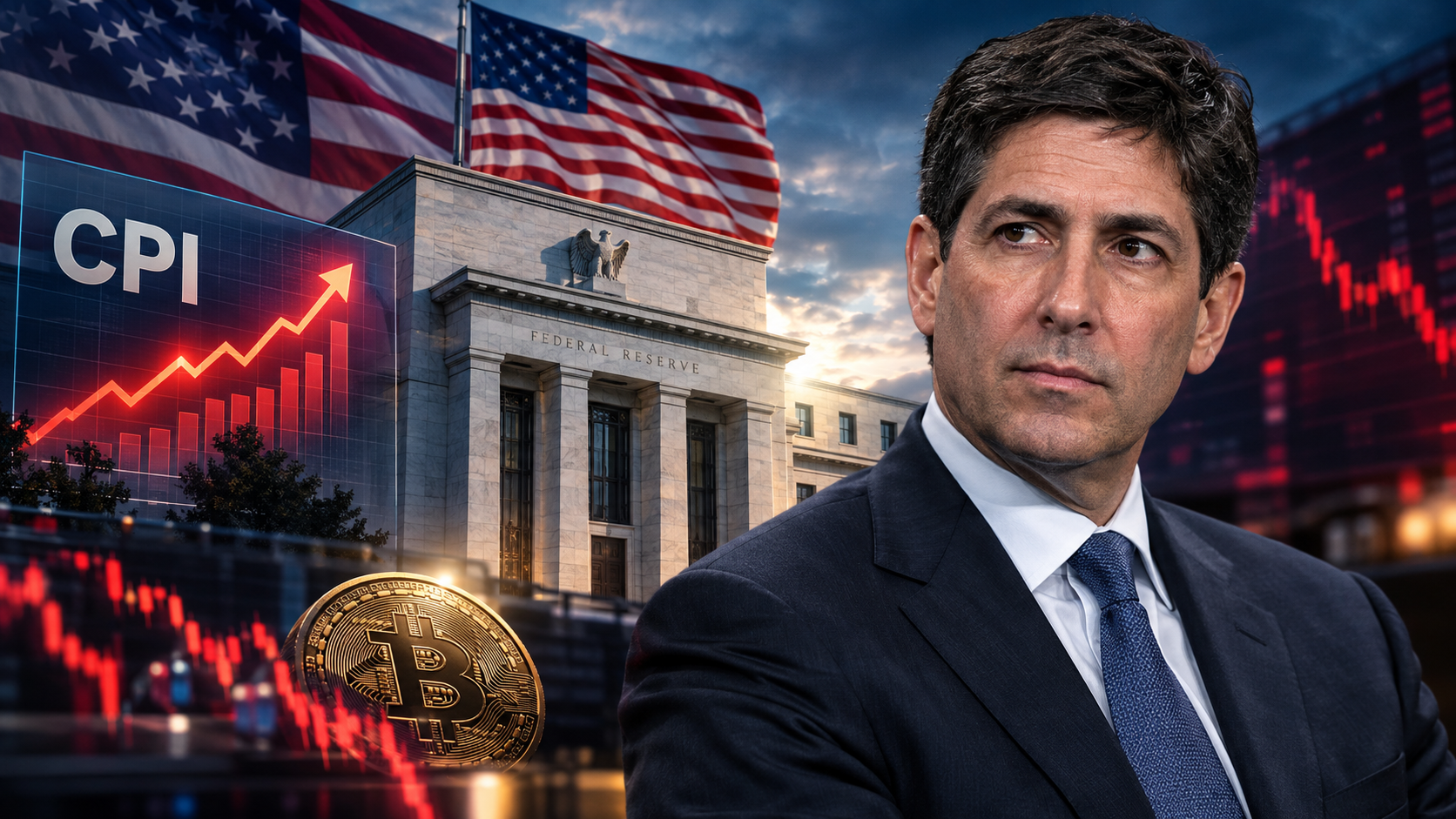
US inflation accelerated in September, putting renewed pressure on the Federal Reserve as policymakers weigh the need to contain rising prices against the risk of weakening economic activity .
The Consumer Price Index (CPI) increased 3.7% over the 12 months through September, up from 3.4% in August, according to data released by the US Bureau of Labor Statistics on October 14. Prices also climbed 0.6% month over month, compared with a 0.4% increase in August .
Core CPI, which excludes food and energy, rose 2.6% annually, compared with 2.4% in August. On a monthly basis, core prices increased 0.3%, matching the previous month's gain .
The latest figures complicate the Federal Reserve's policy outlook under Chair Kevin Warsh. Persistent inflation creates a reason to maintain restrictive monetary policy or consider further tightening, while a weakening labor market could argue for caution .
However, the data does not automatically mean the Fed must raise interest rates at its next meeting. Policymakers will also consider employment conditions, other inflation measures and the outlook for economic growth .
September CPI Report: What the Numbers Show
The September report points to a renewed acceleration in consumer prices, with energy costs playing a major role in the monthly increase .
| Inflation indicator | September 2026 | August 2026 |
|---|---|---|
| Headline CPI, year over year | 3.7% | 3.4% |
| Headline CPI, month over month | 0.6% | 0.4% |
| Core CPI, year over year | 2.6% | 2.4% |
| Core CPI, month over month | 0.3% | 0.3% |
Source: US Bureau of Labor Statistics — September 2026 CPI report.
Headline inflation increased as gasoline and other energy-related costs rose. The BLS reported that its gasoline index climbed 9.1% in September, accounting for more than half of the monthly increase in the overall CPI. The broader energy index advanced 5.2% during the month .
The figures matter because higher fuel costs can affect household budgets and business expenses, including transportation and distribution. If higher costs spread into other goods and services, inflation could prove more persistent .
Core inflation provides another important signal. Although it excludes food and energy, core CPI remained above the Federal Reserve's 2% longer-run inflation objective. The Fed's preferred inflation gauge, however, is the Personal Consumption Expenditures (PCE) price index, rather than CPI alone .
Why Kevin Warsh Faces a Difficult Policy Choice
The latest inflation report highlights the tension between the Federal Reserve's two main objectives: price stability and maximum employment .
If inflation remains elevated, keeping interest rates sufficiently restrictive can help limit demand and reduce pressure on prices. But higher borrowing costs can also make mortgages, business loans and consumer credit more expensive, potentially slowing economic activity and hiring .
Cutting rates too soon could risk easing financial conditions before inflation is under control. Raising them too aggressively, on the other hand, could put additional pressure on employers, consumers and businesses .
This is the policy dilemma behind the claim that Warsh is "trapped." It describes the competing risks facing the central bank, rather than an established conclusion that the Fed has no viable choices .
The Federal Reserve can also hold rates steady while assessing additional data. Its decision will depend on how policymakers evaluate the persistence of inflation, labor-market conditions and the balance of risks to the economy .
Warsh became Fed chair on May 22, 2026, for a four-year term, according to the Federal Reserve's historical profile .
Could the Fed Raise Interest Rates Again?
A further rate increase remains one possible response to persistent inflation, but the September CPI figures alone do not establish that such a move is inevitable .
The Fed raised its benchmark interest rate by 25 basis points at its September 15–16 meeting, bringing the target range to 3.75%–4.00%, Reuters reported. The central bank also indicated that further increases could be considered if inflation pressures persisted .
Before the latest CPI release, financial markets were already assessing the possibility of another increase later in the year. Reuters reported that markets had assigned approximately a 22% probability to an October rate hike before the inflation figures were released. That estimate reflected market pricing at the time, not a commitment by the Fed .
The latest inflation reading adds to the debate, but the labor market and other economic indicators will also matter. A central bank does not normally determine its policy solely from one month's consumer-price data .
Investors will therefore be watching upcoming employment figures, PCE inflation data, Federal Reserve communications and the October 27–28 policy meeting for additional clues .
What the Inflation Report Could Mean for Bitcoin and Crypto Markets
The US inflation report is also relevant to cryptocurrency investors because Federal Reserve policy can influence borrowing costs, the dollar, Treasury yields and appetite for riskier assets .
Bitcoin and other cryptocurrencies do not have a fixed or predictable response to inflation data. Their prices can move in response to interest-rate expectations, liquidity conditions, investor positioning and developments specific to the digital-asset market. As we reported in our coverage of BlackRock's US stock outlook, institutional investors are closely monitoring macroeconomic conditions.
Three broad scenarios are worth watching.
1. Inflation remains elevated
If further data confirms persistent price pressures, markets could anticipate tighter monetary policy for longer. Higher expected borrowing costs and Treasury yields can weigh on some risk assets, including cryptocurrencies, although the actual market reaction depends on what investors have already priced in .
2. Inflation begins to cool
If subsequent reports show sustained progress toward the Fed's inflation objective, investors may become more confident that tighter monetary policy will eventually ease. That could support risk appetite, but it would not guarantee a Bitcoin rally .
3. Inflation stays high while employment weakens
This scenario presents a more complicated outlook. The Fed could face pressure to contain inflation while avoiding unnecessary damage to employment and economic growth. Markets could respond with increased volatility as investors reassess the likely path of interest rates .
For crypto traders, the distinction between the reported figures and the market's expectations is especially important. Prices often move not simply because inflation is high or low, but because the data changes expectations about future monetary policy .
The September report therefore represents an important economic input, not a standalone prediction for Bitcoin's next move .
Why the Difference Between CPI and Core CPI Matters
Headline CPI measures changes in the prices of a broad basket of consumer goods and services. It includes food and energy, which can fluctuate significantly .
Core CPI excludes food and energy to provide a view of price movements without those more volatile categories. It can help analysts assess whether inflation pressures are broadening beyond changes in fuel or food prices .
In September, headline CPI rose to 3.7% annually while core CPI increased to 2.6%. The difference indicates that overall consumer-price inflation was running faster than the measure excluding food and energy .
Neither measure alone determines the Fed's decision. Policymakers also examine PCE inflation, wages, employment, productivity, financial conditions and other indicators when assessing whether inflation is likely to persist .
The September data should therefore be viewed as part of a wider economic picture .
What Investors Should Watch Next
The next stage of the market reaction will depend on whether subsequent economic releases reinforce or weaken the inflation concerns raised by September's numbers .
Investors will be watching:
- PCE inflation: The Federal Reserve's preferred inflation measure.
- Employment data: Evidence of whether hiring and labor-market conditions are deteriorating.
- Treasury yields and the US dollar: Market indicators that can reflect changing expectations for monetary policy.
- Federal Reserve statements: Signals about whether officials believe further tightening is necessary.
- Bitcoin price action: Whether crypto markets respond to changing rate expectations, liquidity conditions and broader risk sentiment.
For long-term investors, the report is a reminder that monetary policy remains an important influence on financial markets. Short-term traders, meanwhile, should be careful about treating a single inflation release as a reliable signal for the direction of Bitcoin or other digital assets .
Frequently Asked Questions
Why did US inflation rise to 3.7% in September 2026?
Headline CPI increased from 3.4% in August to 3.7% in September. The BLS reported a 9.1% monthly increase in gasoline prices, which accounted for more than half of the monthly rise in overall CPI .
What was US core CPI in September 2026?
Core CPI rose 2.6% over the year and 0.3% over the month. The annual rate was up from 2.4% in August .
Will Kevin Warsh raise interest rates?
The September inflation report may influence the Fed's deliberations, but it does not establish that a rate increase is certain. The decision will depend on the full set of economic data and policymakers' assessment of inflation and employment risks .
How could higher US interest rates affect Bitcoin?
Higher expected rates can tighten financial conditions and weigh on risk appetite. However, Bitcoin's price also responds to liquidity, investor positioning, regulatory developments and crypto-specific factors, so the relationship is not automatic .
Is the Federal Reserve's inflation target 2%?
Yes. The Federal Reserve's longer-run inflation objective is 2%, measured using the annual change in the PCE price index. CPI is another important indicator but is not the Fed's preferred inflation gauge .
Conclusion
The September 2026 CPI report presents a fresh challenge for the Federal Reserve. Headline inflation accelerated to 3.7%, while core inflation reached 2.6%, reinforcing concerns that price pressures have not yet returned to the central bank's longer-run objective .
For Kevin Warsh, the task is to balance inflation control against the risks that restrictive monetary policy could create for employment and economic growth. A rate increase, a pause or a change in the policy outlook will depend on how the evidence develops .
For cryptocurrency markets, the key question is not simply whether inflation is high. It is whether the latest data changes expectations for interest rates, liquidity and risk appetite. Until more evidence emerges, claims that the Fed is certain to hike or that Bitcoin must rise or fall would go beyond what the CPI report establishes .
Sources
- US Bureau of Labor Statistics — Consumer Price Index, September 2026
- Reuters — US consumer prices accelerate in September on costlier gasoline
- Federal Reserve History — Kevin M. Warsh
Disclaimer: This article is for informational purposes only and does not constitute investment or financial advice. Cryptocurrency markets are volatile, and investors can lose money.