Wall Street Pushes Back as 22 Companies Object to OKXICE Tokenized Stock Plans
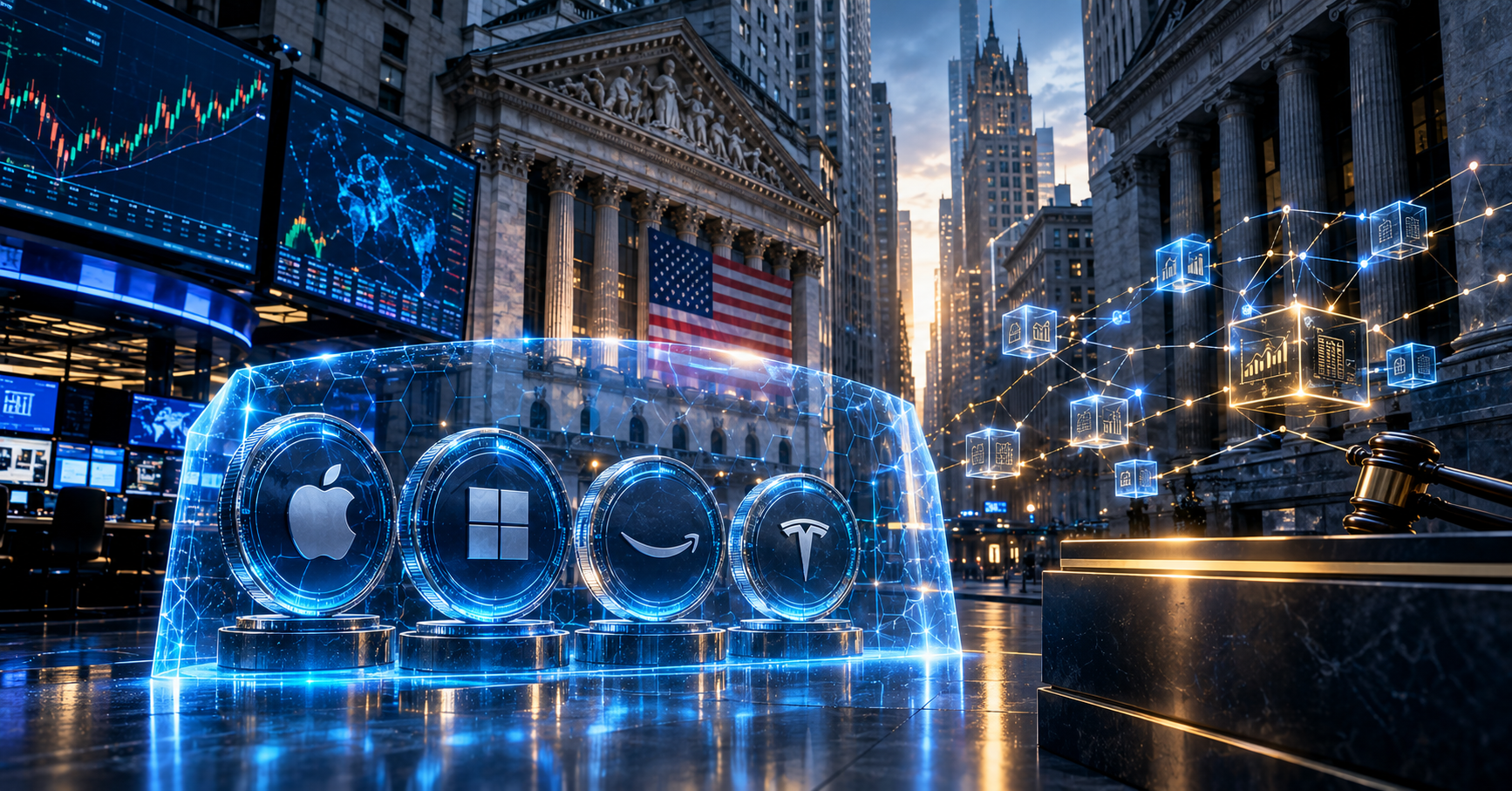
The push to bring traditional US stocks onto blockchain networks is facing an early test of corporate resistance. At least 22 companies have objected to plans for tokenized versions of their shares to trade on the proposed OKXICE platform, according to reporting published on October 23–26, 2026.
The companies include major names such as Microsoft, Alphabet, Goldman Sachs, Wells Fargo, Cisco and Broadcom, alongside firms operating in semiconductors, artificial intelligence infrastructure, healthcare and other industries. Their objections are directed at the proposed trading venue backed by cryptocurrency exchange OKX and Intercontinental Exchange (ICE), the parent company of the New York Stock Exchange.
The growing list raises a central question for the tokenization industry: can blockchain-based stock markets expand if the companies whose shares are being represented do not want to participate?
The answer is more complicated than a simple rejection of tokenization. The objections concern a specific proposed venue and a regulatory process that gives companies an opportunity to prevent unaffiliated third parties from offering tokenized versions of their shares under the relevant exemption. They do not establish that every company involved opposes all forms of tokenized securities.
What Happened With the OKXICE Tokenization Plan?
OKXICE is a joint venture associated with OKX and Intercontinental Exchange. The initiative aims to create a venue where eligible users could trade tokenized versions of US-listed stocks through blockchain-based infrastructure.
In early October, the venture disclosed plans covering dozens of US-listed stocks. The proposal attracted attention because it combines a major cryptocurrency exchange's digital-asset infrastructure with the market expertise and financial-market connections associated with ICE.
The idea behind tokenized stocks is relatively straightforward. A digital token can represent a security and potentially make it easier to transfer, settle or access through blockchain-based systems. Depending on the design and regulatory structure, such markets could support longer trading hours and new ways of connecting investors with financial products.
However, a token representing a company's shares is not automatically the same thing as a conventional share registered and traded through an established securities-market structure. The legal rights attached to the token, how ownership is recorded, how transactions are supervised and how investors receive shareholder benefits all matter.
The objections to OKXICE bring those questions into focus before the proposed venue has demonstrated its model at scale.
Which Companies Have Objected?
Reporting published through October 26 identified 22 companies that had objected to having tokenized versions of their shares traded on the planned OKXICE venue.
The reported list includes:
| No. | Company | Ticker |
|---|---|---|
| 1 | Cerebras Systems | CBRS |
| 2 | AppLovin | APP |
| 3 | Applied Digital | APLD |
| 4 | Rocket Lab | RKLB |
| 5 | CoreWeave | CRWV |
| 6 | Verizon Communications | VZ |
| 7 | Applied Optoelectronics | AAOI |
| 8 | Broadcom | AVGO |
| 9 | UnitedHealth Group | UNH |
| 10 | Goldman Sachs | GS |
| 11 | Microsoft | MSFT |
| 12 | Qualcomm | QCOM |
| 13 | Caterpillar | CAT |
| 14 | McDonald's | MCD |
| 15 | Western Digital | WDC |
| 16 | Alphabet | GOOGL / GOOG |
| 17 | Arm Holdings | ARM |
| 18 | Wells Fargo | WFC |
| 19 | Cisco Systems | CSCO |
| 20 | Intuit | INTU |
| 21 | Moderna | MRNA |
| 22 | Marvell Technology | MRVL |
Note: This is the reported list of objecting companies as of the latest coverage reviewed for this article. The count can change as additional notices are disclosed or updated.
The range of companies involved is notable. The list spans established technology companies, financial institutions, healthcare businesses and newer firms associated with artificial intelligence infrastructure and advanced computing.
That breadth makes the objections relevant to the wider debate over tokenized securities. But the list should not be interpreted as evidence that these companies have rejected every blockchain application or every possible method of issuing digital securities.
Why Are Companies Saying No?
The public notices generally do not provide a detailed explanation for each company's decision. It would therefore be inaccurate to claim that all 22 companies objected for the same reason.
Nevertheless, the dispute highlights several questions that companies and investors may want answered before third-party tokenized shares begin trading.
1. Who Controls the Tokenized Version of a Share?
A company may want clarity about how a third party can create and distribute a token representing its stock without a direct commercial relationship with the issuer.
Questions can include how the underlying security is represented, what records establish ownership and how the tokenized instrument relates to the company's existing share register and transfer processes.
For corporate legal and investor-relations teams, those are important questions because a tokenized product can carry the company's name and ticker even when the company did not design, sponsor or endorse that particular offering.
Applied Optoelectronics has publicly raised concerns about uncertainty surrounding the potential effects of tokenization on stock prices, liquidity and volatility, as well as the risk that investors could mistakenly believe the company was involved in an offering it did not sponsor.
Those concerns provide one concrete example, but they should not automatically be attributed to every company on the objection list.
2. Could Trading Fragment Liquidity?
Traditional US stock markets operate within an established system of exchanges, brokers, market makers, reporting requirements and market-data infrastructure.
A separate blockchain-based venue could create additional trading opportunities, but it also raises questions about how prices and liquidity would interact with existing markets.
If the same underlying stock is represented across different trading environments, market participants need to understand where prices are formed, how discrepancies are handled and whether enough liquidity exists to execute orders efficiently.
Fragmented liquidity can make it harder for investors to find the best available price, particularly when trading volumes are low.
Tokenization advocates argue that blockchain infrastructure could make markets more accessible and efficient. Critics and market-structure specialists, however, want to know whether those potential benefits can be delivered without weakening existing investor protections.
3. What Happens to Shareholder Rights?
A central question is whether a tokenized security provides rights equivalent to those attached to the corresponding conventional share.
Depending on the product's legal structure, these rights may include receiving dividends, participating in shareholder votes and accessing relevant corporate information.
The technical ability to transfer a token does not, by itself, establish that its holder has all the legal rights of a traditional shareholder.
For issuers, investors and regulators, the distinction between a token that represents an actual security and a product that merely tracks a stock's price is fundamental.
The SEC's framework addresses this issue by requiring eligible tokenized stocks traded under the exemption to provide holders with the same rights and privileges as the equivalent traditional securities.
What Does the SEC's Innovation Exemption Allow?
On September 17, 2026, the US Securities and Exchange Commission announced a temporary, conditional innovation exemption intended to facilitate certain forms of tokenized stock trading.
The framework provides qualifying Tokenized Securities Venues with specified exemptions, subject to conditions. It is not a blanket permission for every crypto platform to list any stock as a blockchain token.
One important condition concerns tokenized securities created by third parties unaffiliated with the underlying stock issuer.
Under the SEC's framework, a qualifying venue must notify the issuer before making such a tokenized stock available for trading. The issuer must receive at least 30 calendar days before trading can commence, and a timely objection prevents that venue from offering the stock under the applicable exemption.
The framework also includes requirements relating to shareholder rights, public notices, trading limits and the operation of the venue.
The process gives companies a formal opportunity to object to a third-party tokenization arrangement. It also means a venue's proposed list of stocks does not guarantee that every planned tokenized instrument will become available.
For the OKXICE initiative, the growing number of objections demonstrates how the issuer-notification process can affect which stocks a venue is able to offer.
Does This Mean Wall Street Is Against Tokenization?
Not necessarily.
One of the biggest risks in interpreting the dispute is treating opposition to a particular trading arrangement as opposition to the underlying technology.
Tokenization covers a wide range of financial applications, including tokenized money-market funds, bonds, private-market investments and other assets. A company can question the way an unaffiliated platform plans to trade tokens representing its shares while remaining interested in blockchain-based financial infrastructure.
Nasdaq, for example, has expressed support for tokenization while raising concerns about trading arrangements outside the traditional US national market system. Its position illustrates the distinction between supporting the technology and supporting every proposed market structure.
Some financial institutions and asset managers are also exploring tokenization for products such as money-market funds and other real-world assets.
The central disagreement is therefore not simply whether assets should move onto blockchains. It is also about who issues the tokens, which legal rights they carry, how trading is supervised and how the new systems interact with existing markets.
That distinction is important for investors assessing whether the latest objections represent a setback for tokenization as a whole.
What Could the Objections Mean for OKXICE?
The immediate effect is that the affected stocks cannot be offered on the venue under the relevant exemption when the issuer has submitted a timely objection.
For OKXICE, that could mean a narrower initial selection of stocks than originally anticipated. It may also require the venture to explain its operating model more clearly to issuers, investors and market participants.
However, the objections do not automatically prevent OKXICE from pursuing other stocks that meet the applicable requirements. Nor do they establish that every tokenized stock platform will face precisely the same response.
The commercial challenge is to build a product that issuers consider sufficiently transparent and investors find sufficiently useful.
That may involve clearer explanations of ownership rights, stronger operational safeguards, better disclosure and more detailed engagement with companies before proposed listings are announced.
The venue's longer-term prospects will depend on how it addresses these questions and whether investors see meaningful advantages over existing ways of trading US equities.
Could Tokenized Stocks Still Grow?
Tokenized stocks could offer several potential benefits if their legal and market structures work as intended.
Blockchain infrastructure may support more flexible settlement arrangements, programmable financial products and trading access beyond conventional market hours. Tokenized securities could also eventually connect with other regulated digital-asset services.
But these are potential advantages, not guaranteed outcomes. Actual benefits will depend on liquidity, operating costs, investor protections, regulatory compliance and the rights attached to each instrument.
Around-the-clock trading, for example, does not automatically mean a market will have deep liquidity at every hour. Similarly, putting a stock on a blockchain does not guarantee faster settlement in every operating model or remove the need for reliable custody and legal ownership records.
The issuer objections show that technical innovation alone may not be enough to establish a new financial market. Corporate participation, regulatory clarity and investor confidence will also matter.
If tokenization platforms can demonstrate how they protect shareholder rights and operate alongside existing markets, some companies may become more comfortable with the model. Others may prefer to issue or distribute tokenized securities through arrangements they directly control.
The Bigger Picture: A Test of Market Structure, Not Just Blockchain Technology
The growing number of objections is an important early test for the tokenized-stock industry. It reveals that introducing blockchain infrastructure into public equities involves more than building smart contracts and creating digital tokens.
Companies want clarity about how their shares are represented and traded. Investors need to understand the rights they receive. Regulators must determine how new trading arrangements fit within securities law and established market safeguards.
At the same time, the objections do not prove that tokenization has failed. They demonstrate that the structure of the market matters as much as the technology itself.
For OKXICE, the next stage will be about showing that its model can operate within the regulatory framework while addressing the concerns of issuers and investors.
For the wider industry, the lesson is clear: tokenization may change how securities are traded, but adoption will depend on trust, shareholder rights, liquidity and regulatory confidence—not technology alone.
As the market develops, the key question is no longer simply whether stocks can be represented on a blockchain. It is whether companies, investors and regulators can agree on the rules governing those digital representations.
Sources and Further Reading
- Reuters — Reporting on the latest issuer objections to the OKXICE tokenized-stock plan.
- CoinDesk — Analysis of why corporate opposition may reflect concerns about the proposed market structure rather than rejection of tokenization itself.
- U.S. Securities and Exchange Commission — Official information on the Innovation Exemption and its conditions for tokenized securities venues.
- Decrypt — Reporting on the increase in disclosed issuer objections through October 2026.
Disclaimer: This article is for informational purposes only and does not constitute financial, investment or legal advice.